Day Trip from Tokyo · Area Guide
Yokohama
Japan's most international city — a port, Chinatown, and the open sea. Only 30 minutes from Tokyo but a world apart.
Yokohama grew up differently from Tokyo — shaped by its port and the foreign traders who settled here from the 1850s onward. That international character still runs through the city today: in its vast Chinatown, its breezy waterfront, and the Meiji-era Western houses perched quietly above the bay. Terry has been coming here for decades and knows exactly where to take you.
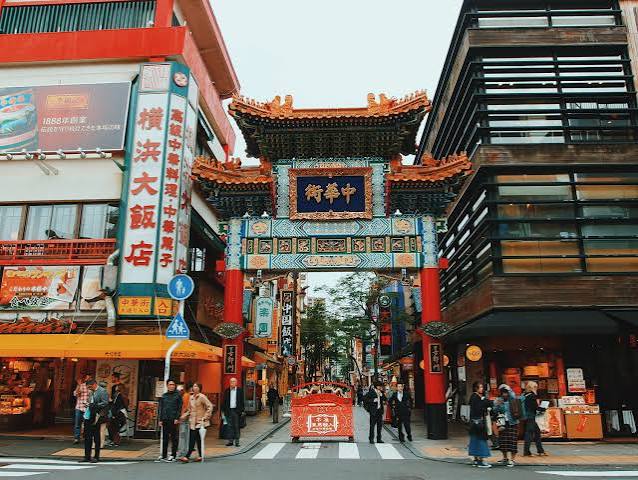
Japan's largest Chinatown — Yokohama Chukagai — is a dense, intoxicating world unto itself: nearly 600 restaurants, traditional medicine shops, roasted chestnut vendors, dim sum parlours, and ornate ceremonial gates draped in red and gold lanterns, compressed into a street grid barely ten minutes' walk across. The community here traces its origins to the 1860s, when Chinese merchants and traders settled in Yokohama following the port's opening to foreign commerce in 1859 — making it one of the oldest established Chinese communities in Japan, with a depth of history that is palpable in the older shopfronts and the smoke-blackened temple interiors away from the main boulevard.
The Kantei-byo temple, dedicated to the deified general Guan Yu and rebuilt after the 1923 earthquake in vivid red and gold, is the spiritual heart of the community and worth visiting before the main eating begins. The food here divides clearly between the tourist-facing restaurants on Chukagai-dori with their photo menus and long queues, and the smaller, less decorated establishments on the side streets where the local Chinese community actually eats — and where the cooking is consistently better. Terry knows the difference, and knows which stalls are worth joining a queue for and which are better avoided entirely.
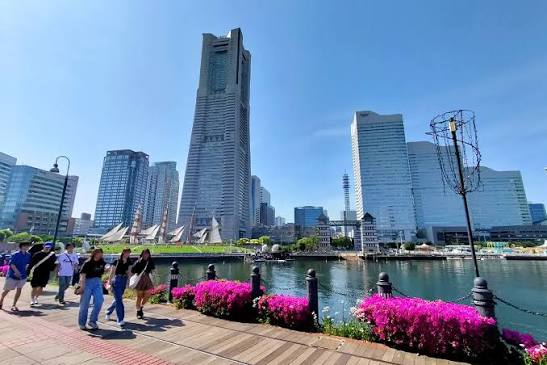
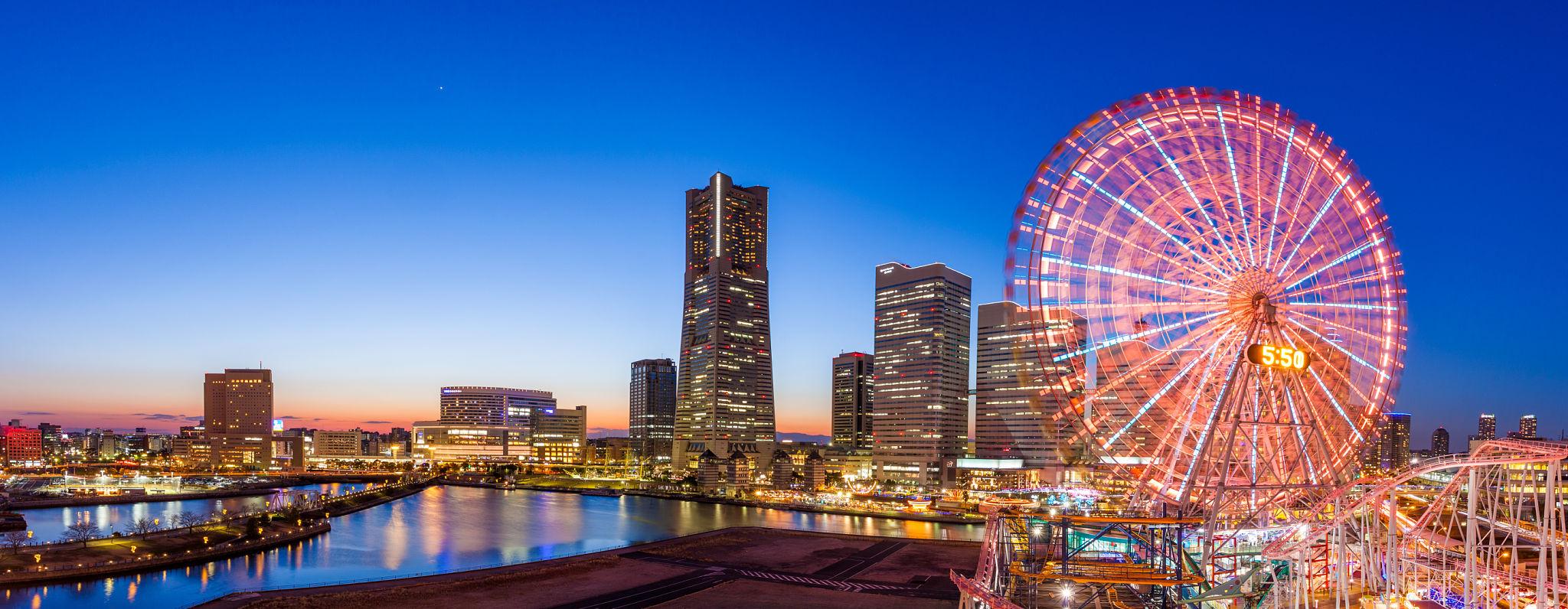
Minato Mirai 21 — "Harbour of the Future, 21st Century" — is a large-scale waterfront redevelopment built on the site of the former Mitsubishi shipyards and Yokohama's old freight rail yards, transforming what was disused industrial port infrastructure into one of Japan's most admired urban planning projects. The Landmark Tower, completed in 1993, held the title of Japan's tallest building for sixteen years, and the Sky Garden observation deck on the 69th floor still provides one of the finest elevated views available anywhere in the Kanto region. The Cosmo Clock 21 Ferris wheel — briefly the largest clock in the world at the time of its construction — has become the district's most recognisable landmark after dark, its illuminated face reflected in the harbour.
What makes Minato Mirai genuinely interesting beyond the headline architecture is the layering of different eras within the same district: the Yokohama Red Brick Warehouse complex (Aka Renga Soko), completed in 1911 and 1913 as customs storage facilities, now operates as shops and event spaces directly beside glass towers completed ninety years later. The broad harbour-facing esplanade between the two warehouses is one of the finest public spaces in the city — open, breezy, and oriented toward the water in a way that few urban redevelopments anywhere achieve. Terry walks the whole district as a connected sequence, explaining the original shipyard layout and how the planning decisions that shaped the current streetscape were made.

Yamashita Park holds a specific place in Japanese history: opened in 1930 on land reclaimed using rubble from the Great Kanto Earthquake of 1923, it was the first Western-style public seaside promenade in Japan, and its creation was itself an act of civic recovery and ambition following the disaster that killed over 140,000 people in the greater Yokohama-Tokyo area. The park stretches for about 700 metres along the bay on what was once the active working waterfront where the foreign trading ships docked — the same waterfront where Japan's opening to the world played out across the second half of the 19th century.
The permanent mooring of the Hikawa Maru — a 1930 passenger liner that operated the Yokohama-to-Seattle route for Japan's NYK shipping line until 1960 — serves as the park's centrepiece and is one of the most rewarding museum ships in Japan. The interiors, designed to a standard that competed directly with the great Atlantic liners of the period, are remarkably intact: the first-class dining saloon, the smoking room in polished wood, the compact cabins with their original fixtures, and the engine room below decks that explain the extraordinary engineering behind a 1930s ocean crossing. Charlie Chaplin sailed on this ship; so did the Japanese war correspondent who covered the fall of Nanking. The ship carries history in every bulkhead.
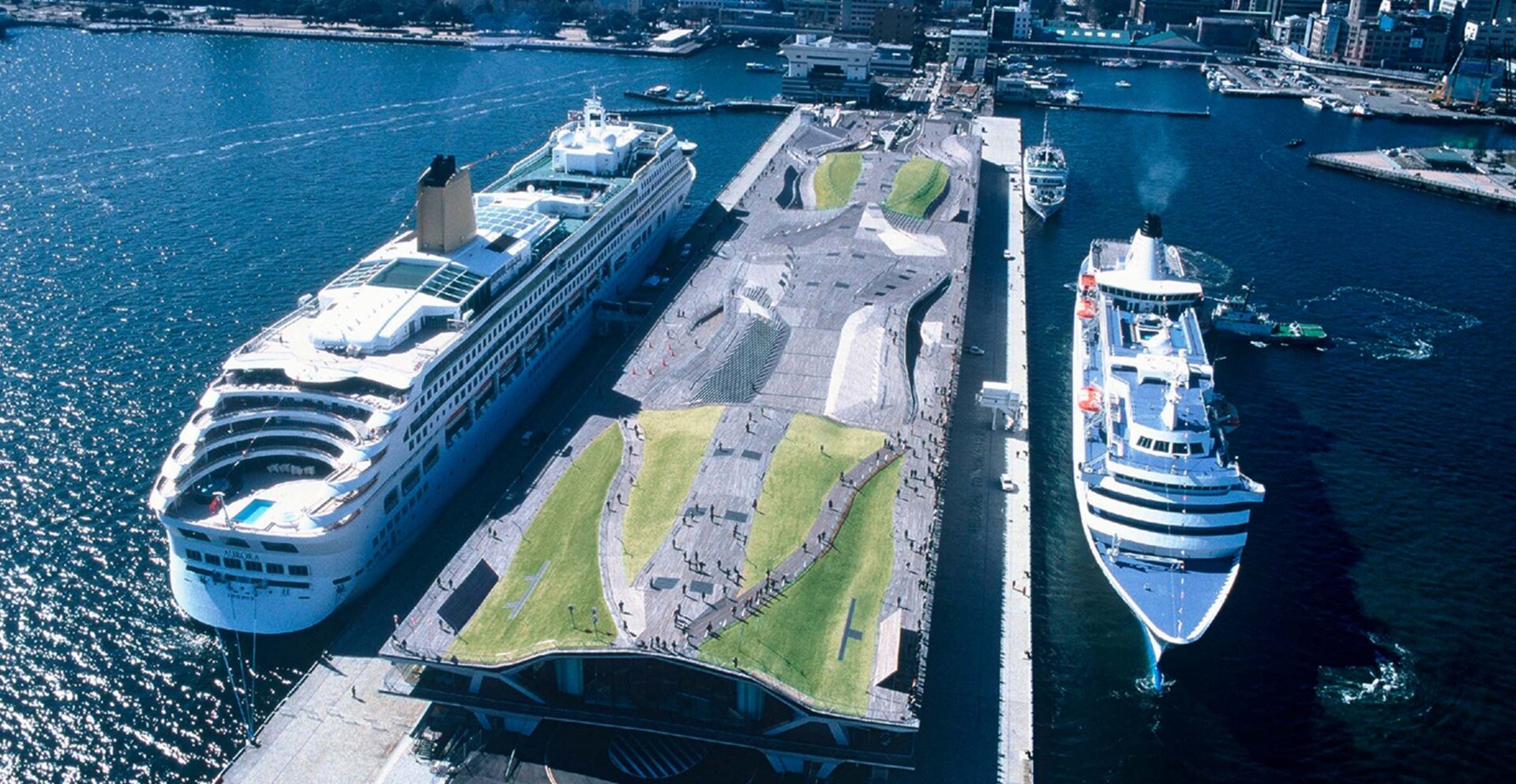
Osanbashi — the International Passenger Terminal — is one of the most striking pieces of contemporary architecture in Japan: a vast undulating structure extending 458 metres into Yokohama Bay, its timber-clad rooftop forming a continuous public deck of gently rolling waves that can be walked from end to end as an open park above the water. The design was selected through an international competition won in 1995 by London-based architects Farshid Moussavi and Alejandro Zaera-Polo, who conceived the building as a topological extension of the city rather than an object placed upon it — the roof flows from the street level of the quayside without a visible seam, and the interior spaces below are structured around continuous ramps rather than stairs and floors.
The building functions simultaneously as a working international cruise terminal — large ocean liners berth here regularly — and as a genuinely popular public space for Yokohama residents who come to walk the timber deck, watch the harbour traffic, and take in the panoramic view of Minato Mirai to the west and the bay opening south toward the Pacific. The cedar decking underfoot has weathered to a silver-grey that gives the surface a warmth no render or photograph quite captures. At golden hour the light catches the water on three sides simultaneously, and the Minato Mirai towers shift from glass-white to amber as the sun drops. It is, without question, one of the finest places to simply stand in the whole of the Kanto region.

Yamate — the "mountain hand" district — is the leafy bluff neighbourhood above the port where Yokohama's foreign residents built their homes, churches, and clubs during the Meiji and Taisho eras, creating an enclave of Victorian and Edwardian domestic architecture that still stands largely intact along its quiet, tree-lined streets. Following the opening of the port in 1859, the foreign settlement was initially confined to a specific zone near the waterfront, but as trade and prosperity grew through the latter decades of the 19th century, the Western community moved uphill to the cooler, breezy ridge above the city and began building in the styles they knew from home — resulting in the unusual concentration of gabled, veranda-wrapped wooden houses that characterises the district today.
Several of the surviving Western-style residences are open to the public as heritage museums, including the Bluff No. 18 house and the British House, which preserve their original furnishings and fittings with considerable care. The Foreigners' Cemetery — a hillside graveyard where over 4,000 foreign nationals who died in Japan are buried, representing over fifty nationalities — is one of the most atmospheric and overlooked sites in all of Yokohama, its weathered headstones telling the stories of missionaries, merchants, sailors, and adventurers who came to Japan and never left. Terry reads the cemetery as a social history of the foreign presence in Meiji Japan in a way that no museum exhibit can match.

Motomachi — literally "the original town" — runs parallel to the base of the Yamate bluff along the course of a small river now covered over, and is Yokohama's most distinctive shopping street: a graceful, low-rise boulevard of independent boutiques, long-established family businesses, and European-influenced café culture that grew up specifically to serve the foreign community living on the hillside above. The street developed its Western character in the Meiji period through commercial necessity — the foreign residents required goods and services that the traditional Japanese shopping streets couldn't supply — and that cosmopolitan inheritance is still visible in the architecture, the merchandise, and the approach to quality that distinguishes Motomachi from every other shopping street in the city.
Unlike Tokyo's fashion districts, which refresh their tenant mix almost continuously, Motomachi has resisted chain-store homogenisation with unusual success. Several of the businesses on the street have been operating under the same family ownership for three, four, or five generations — the leather goods makers, the hat shops, the tailors who still cut and sew on the premises. The street has been famous for its Western-style bread since the Meiji era, when Japanese bakers first learned the craft from French and German residents in the foreign settlement; the bakeries here still take this seriously in a way that is noticeably different from the more decorative approach common elsewhere. Walking Motomachi in the late afternoon, after the bulk of the day-trip visitors have already left for the station, gives it a quieter, more local quality that is very much worth waiting for.
* Terry's personal transit, admissions & meals are also included — no hidden costs on the day.
Yokohama is best enjoyed as a full-day trip from Tokyo — there's genuinely too much to see in half a day. Comfortable walking shoes are strongly recommended.
Everything is covered in your flat rate — transit, admissions & meals are all pre-arranged so there are no out-of-pocket costs on the day.
Most visitors see only Chinatown and Minato Mirai — and miss the quiet layers that make Yokohama genuinely special. Terry has spent decades exploring this city and knows where the real stories are: the side streets of Noge, the old warehouses of Bashamichi, the extraordinary Foreigners' Cemetery on the Yamate bluff. Tell him what interests you most and he'll build a day that goes well beyond the standard itinerary.
All tours are entirely private — no shared groups, no fixed script, no rushing to keep up with strangers.