🌊 Wild Coast · Tuna Port · Island Trails · Navy Curry Dinner
Miura Peninsula
Japan's finest tuna port, Jogashima's sea cliffs, a Meiji lighthouse, and Yokosuka Navy curry for dinner — train and foot from Tokyo.
The Miura Peninsula is one of the great overlooked day trips from Tokyo — a rugged coastal world that most visitors speed through without ever stopping. Terry slows it right down: a working tuna port, an Edo-period shrine, a bridge walk to a wild island, a lighthouse that has guided ships since 1870, Pacific sea cliffs, and then the train north to Yokosuka for one of Japan's most celebrated dinners — the legendary Navy curry that the city has been cooking since the Meiji era. The route combines train hops between the main stops with long walks along the coast and across the island entirely on foot.
Misaki has been Japan's premier tuna port since the Edo period, and the first thing you notice when you arrive is the smell of the sea and the sound of working boats. The fishing fleet here ranges as far as the Indian Ocean in pursuit of bluefin tuna, and the morning scene on the quayside — trawlers unloading, fish boxes being sorted, seagulls wheeling overhead — is one of the most genuinely alive harbour scenes within reach of Tokyo. Right beside the port sits Urari Marche, the two-storey direct market where local fishers and farmers sell the morning's catch alongside Miura vegetables and Peninsula produce. The first floor is all tuna — whole cuts, fatty toro, offcuts, canned and dried — and gives a vivid impression of just how seriously this small town takes its fish before you've eaten a single bite.
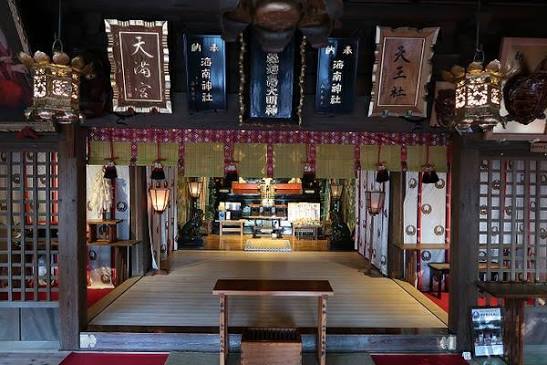
A short walk from the port brings you to Kainan Shrine, which served as the general guardian of the entire Miura Peninsula throughout the Edo period. Founded in 1093 and dedicated to Hachiman — the deity of fishing, the sea, and protection — the shrine has watched over Misaki's fishing families for nearly a thousand years and remains genuinely embedded in the town's daily life rather than preserved for visitors. The approach path is lined with old stone lanterns, many carved with fishing motifs — octopus, tuna, and net patterns — dedicated by grateful fishing families over centuries of safe returns from the Pacific.
The shrine compound is compact but rich in detail. A magnificent ginkgo tree of considerable age shades the main courtyard, its trunk buttressed with the aerial roots that develop over centuries of growth. The main hall carries fine woodcarving typical of late Edo craftsmanship — intricate panels of waves, sea creatures, and celestial patterns worked into the beams and lintels. The ema (votive plaques) left by local fishermen hoping for safe passage and good catches give the place a living, unselfconscious quality that is rare in more visited shrines. In January the shrine hosts the Chakkirako Festival, a ritual dance performed by local girls aged five to twelve that has been designated an Important Intangible Cultural Heritage of Japan — one of the most unusual folk traditions surviving in the Kanto region.

Misaki's tuna is not supermarket tuna. The Pacific bluefin hauled in here is auctioned at the port each morning to Tokyo's top sushi restaurants and to the local places that line the port streets — and eating it within a short walk of the boats that caught it is a genuinely different experience from even the best sushi counter in the city. The cold chain is short, the fish is whole rather than pre-portioned, and the restaurants here have been breaking down tuna for generations. Terry steers you away from the queue-outside tourist spots to a local family restaurant where the kitchen knows which part of which fish to use for each dish.
The maguro don (tuna rice bowl) here arrives loaded with cuts that rarely appear outside specialist fishmongers in Tokyo — deep red akami with its clean iron-rich flavour, silky chu-toro from the mid-fatty belly section, and on good days otoro, the most prized fatty belly cut that melts rather than chews. Beyond the standard cuts, Misaki restaurants serve preparations unique to a town that uses the whole fish: pickled tuna marinaded in local miso, tuna gyoza where the filling is minced dark meat mixed with ginger and spring onion, tuna curry built from off-cuts that would be thrown away anywhere else. This is tuna eaten as the fishing town eats it, not as it appears in guidebooks.
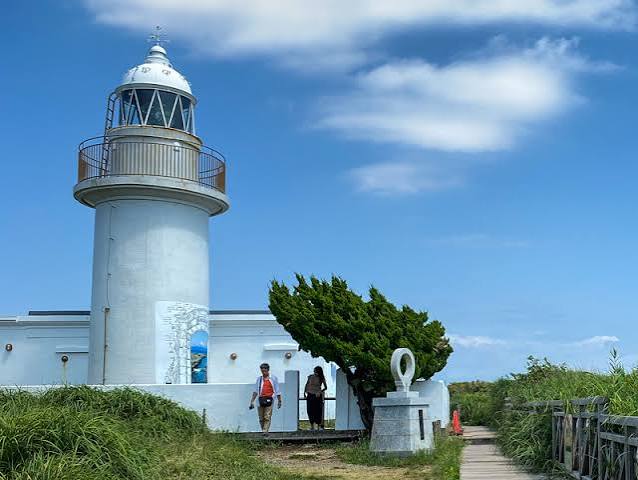
From Misaki Port the coastal path leads southwest to the Jogashima Bridge — built high enough for fishing boats to pass beneath, and one of the finest short coastal walks in the greater Tokyo region with Sagami Bay opening up to the left the whole way. Crossing on foot with the Pacific spreading out in both directions announces immediately that you've left the mainland behind. Jogashima itself is tiny — barely 1.8 km east to west — but what's packed into it is remarkable. At the western tip, Jogashima Lighthouse has guided ships through the entrance to Tokyo Bay since 1870, making it one of the earliest Western-style lighthouses built in Meiji Japan. It was designed by British engineer Richard Henry Brunton, who built 26 lighthouses around the Japanese coast and is considered the father of Japanese lighthouse construction. The surrounding park is free to enter, the views on a clear day stretch to Izu Oshima across the water, and on the best winter mornings Mount Fuji rises above the peninsula behind you in a way that stops people in their tracks.
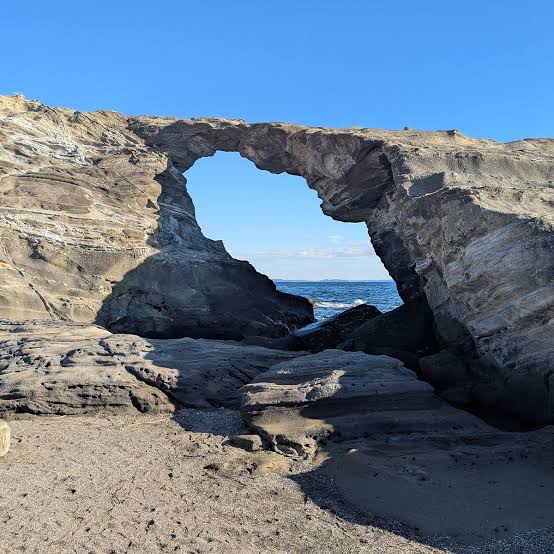
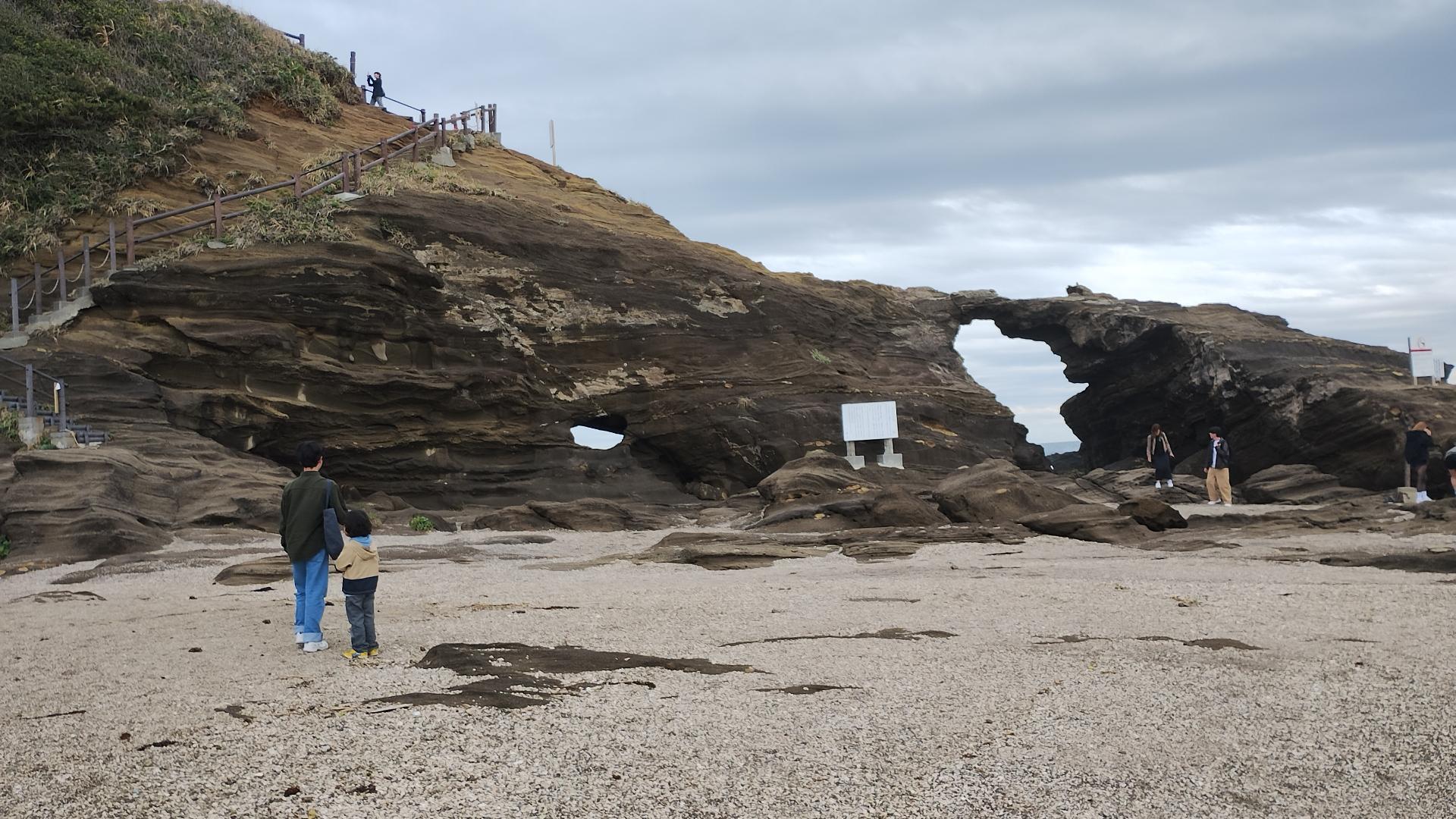
The southern coast of Jogashima is a completely different world from the calm port on the north side — a dramatic stretch of volcanic rock cliffs, blowholes, sea caves, and tidal platforms pounded by Pacific swells. The trail along the south coast leads to Umanose Cave (馬の背洞門), a natural sea arch carved through the headland by centuries of wave action, creating a striking horseshoe of rock above the churning sea. The cave is the most photographed feature on the island and justifiably so — the geometry of the arch, the texture of the rock, and the colour of the water in good light make it genuinely spectacular. Beyond it, the coast trail continues over rocky platforms where tide pools are rich in sea life, cormorants dive in the swell, and a quiet spot on the rocks with the Pacific stretching to the horizon is easily found. From here the route heads back across the bridge to catch the Keikyu bus or a short walk to the train north to Yokosuka.

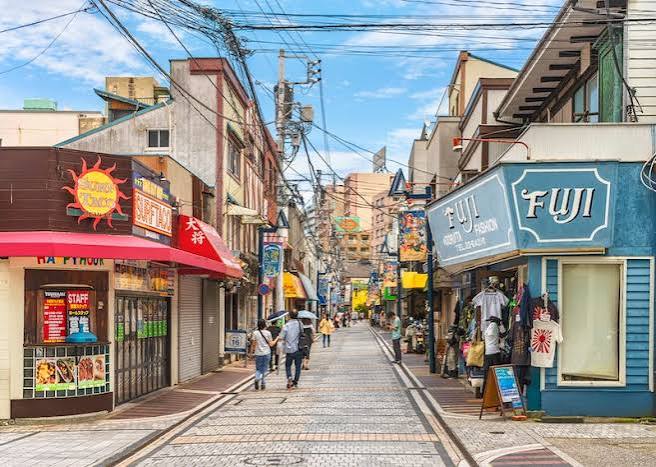
From Misaki, the Keikyu Line runs north directly to Yokosuka — one of Japan's most historically layered port cities and the home of one of its most iconic dishes. Yokosuka Navy curry (横須賀海軍カレー) traces its origins to the Meiji era, when the Imperial Japanese Navy adopted curry as a weekly Friday meal for sailors, based on the British Royal Navy's own curry tradition, to prevent beriberi and keep crews well-nourished on long voyages. The specific Yokosuka recipe — a rich, brown, moderately spiced curry served with rice and a side salad and a glass of milk, exactly as the old naval regulations specified — has been standardised and celebrated by the city since the 1990s and is now served at dozens of restaurants across town. Beyond the curry, Yokosuka rewards a walk along Dobuita-dori — the old shopping street beside the US naval base, lined with American-style diners, military surplus shops, and English-language signs that give it an atmosphere unlike anywhere else in the Tokyo region. The contrast between a morning at Misaki's working fish port and an evening in this East-meets-West naval city makes for a genuinely complete day.
Groups of 5–6 guests: please inquire — rates scale to absorb the additional food costs.
* Terry's personal transit, admissions & meals are also included — no hidden costs on the day.
Sturdy walking shoes with good grip are essential — the Jogashima south coast trail involves rocky, uneven terrain that can be slippery when wet. The rest of the route is easy flat walking between the port, shrine, and town.
Everything is covered in your flat rate — the Misaki Maguro Ticket, all train and bus fares, and both meals are fully integrated into the day, so there's no need to purchase any passes independently.
All guiding is strictly private — no strangers, no group tours, no fixed bus schedules.
If you're a birdwatcher, Terry slows down at Jogashima Park where the island's resident seabird colony is most active. If you want more time in the tide pools, the lighthouse gets a quicker pass. If the Chakkirako Festival falls near your visit date, the entire day can be restructured around it. You set the pace and the focus — Terry handles everything else.