This two-day route threads together some of the most rewarding scenery and history in central Japan, far from the well-worn Tokyo-Kyoto corridor. Day one is anchored in Matsumoto, home to one of Japan's most beautiful original castles, with a side trip to Nagano city and the great pilgrimage temple of Zenko-ji. Day two follows the old Nakasendo highway south through the Kiso Valley — descending through pine forest and mountain villages to the perfectly preserved post towns of Magome and Tsumago, where Edo-period travellers once rested between Tokyo and Kyoto — before arriving in Nagoya to see its famous castle and catching the Shinkansen back to Tokyo. It's a trip built for travellers who want mountains, history, and a genuine sense of old Japan without the crowds of the more famous circuits.
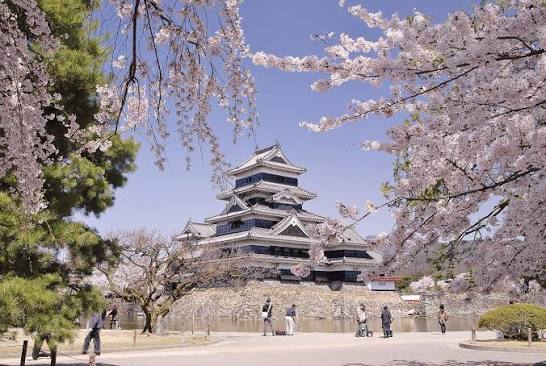
Matsumoto Castle is one of only twelve original castle keeps remaining in Japan, and widely considered the finest. Nicknamed Karasu-jo — the Crow Castle — for its dramatic black-and-white exterior, it was built in the late sixteenth century and has survived earthquakes, fires, and the post-war demolitions that claimed most of Japan's feudal-era castles intact. Unlike the concrete reconstructions found at many famous Japanese castle sites, every beam, staircase, and floorboard inside Matsumoto Castle is original construction, which gives the interior an atmosphere no replica can match — steep wooden stairs worn smooth by four centuries of feet, dim defensive corridors, and a top floor with sweeping views across the city to the snow-capped peaks of the Japan Alps.
The castle sits within a public park surrounded by a wide moat, and the classic photograph — the black keep reflected in the water with the mountains behind — is one of the most recognisable images of feudal Japan. Inside, the six-storey keep houses a small museum of armour, weaponry, and matchlock guns, along with detailed explanations of the defensive engineering that made the castle so difficult to assault: steep concealed staircases, gun ports disguised as decorative elements, and a moon-viewing room added in peacetime that softens the otherwise purely military design. Climbing to the top floor requires a bit of stooping and careful footing on the original stairs, but the reward is a genuine connection to the building's working history as a fortress.
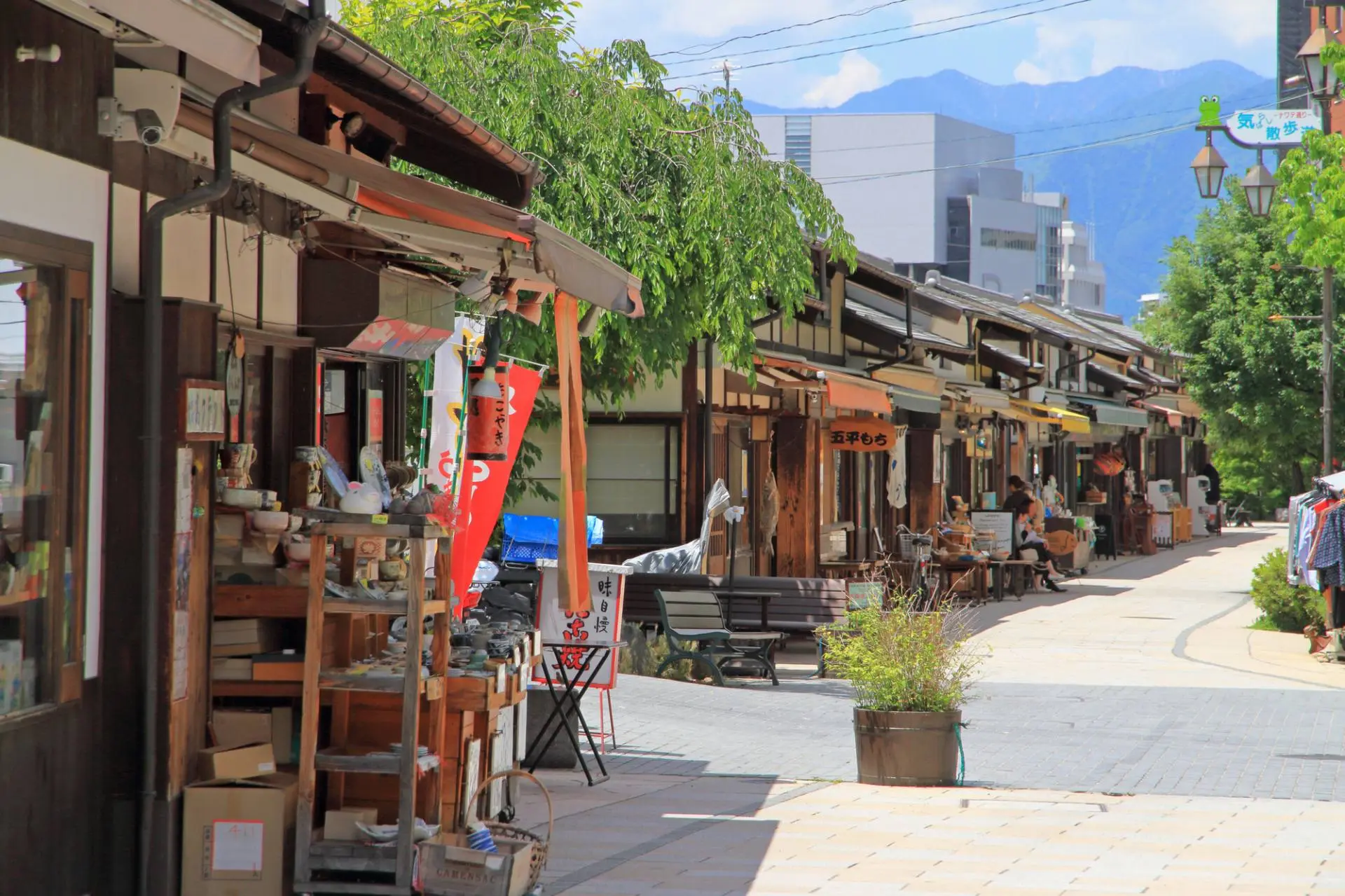
Nawate Street runs along the Metoba River a short walk from the castle, a narrow pedestrian lane lined with around fifty small shops selling antiques, crafts, sweets, and curios, with a quirky local theme — frogs. The street's name relates to an old legend in which a giant frog living in the river protected the town, and the frog motif now appears everywhere: a bronze frog statue at the entrance, frog-shaped sweets, frog charms, and a small shrine dedicated to the creature. It's a lighthearted contrast to the imposing castle nearby, and the shopfronts retain a genuinely local, slightly ramshackle character rather than the polished tourist-street feel found in busier cities.
The street is an easy, atmospheric walk — the river running alongside, willow trees, and small stalls selling grilled rice crackers, oyaki (Nagano's stuffed dumplings), and local sake. It connects naturally from the castle to the rest of Matsumoto's compact old town, where the merchant district of Nakamachi preserves rows of kura — traditional storehouses with thick white plaster walls — now converted into cafes and craft shops. Together, the two streets give a good sense of Matsumoto's identity as a castle town that has kept its historic core intact while remaining a functioning, lived-in city rather than a museum piece.
A short train ride from Matsumoto, Zenko-ji is one of the most significant Buddhist temples in Japan, founded in the seventh century and home to what is said to be the first Buddhist statue ever brought to the country. The statue itself has been hidden from public view for over a thousand years — even the head priest has never seen it — which only adds to the temple's mystique and draws pilgrims from across Japan regardless of Buddhist sect, since Zenko-ji was deliberately built to be non-denominational. The current main hall, a National Treasure, dates from 1707 and is one of the largest wooden structures in eastern Japan, its dark cypress-bark roof and massive timber frame giving it a weight and presence that's immediately apparent on approach up the long stone path lined with stone lanterns and souvenir shops.
The temple's signature experience is the okaidan meguri — a pitch-black underground passage beneath the main altar that pilgrims walk through by feeling along the wall, searching for a metal key said to be attached near the hidden statue above. Finding it is believed to guarantee enlightenment; in practice it is an unusual, slightly unnerving sensory experience that strips away every other distraction and leaves you with nothing but darkness and the wall beneath your fingers. Combined with the temple's broad approach avenue, the surrounding old shopping street selling Nagano specialties, and the genuine devotional energy of the pilgrims still visiting today, Zenko-ji offers a different register of historic Japan than castles or post towns — older, more solemn, and still very much a living religious site.
Magome is the first of two extraordinarily well-preserved post towns on the old Nakasendo highway, the inland route that connected Edo (Tokyo) to Kyoto during the Edo period, used by feudal lords, merchants, and pilgrims long before the railway existed. The town climbs a steep hillside in a single stone-paved street lined with wooden inns, teahouses, and shops, almost entirely rebuilt after a fire in 1895 but in faithful period style — there is no modern intrusion of cars or power lines on the main street, which has been carefully preserved to look much as it would have to a traveller two hundred years ago. Magome is also the birthplace of the novelist Shimazaki Toson, whose work captured the social upheaval of the Meiji era, and a small museum dedicated to him sits partway up the hill.
Walking up through the town, past water wheels, persimmons drying under eaves, and shops selling gohei mochi (skewered rice cakes coated in a sweet miso glaze) and local sake, gives an immediate sense of why this stretch of the Nakasendo has become one of Japan's most loved walking routes. At the top of the hill, a lookout point offers a view across the valley to Mt. Ena on clear days. Magome serves as the starting point for the famous trail walk to Tsumago — a route that, unlike many "historic" attractions in Japan, is an actual continuation of the original Edo-period road rather than a modern recreation.
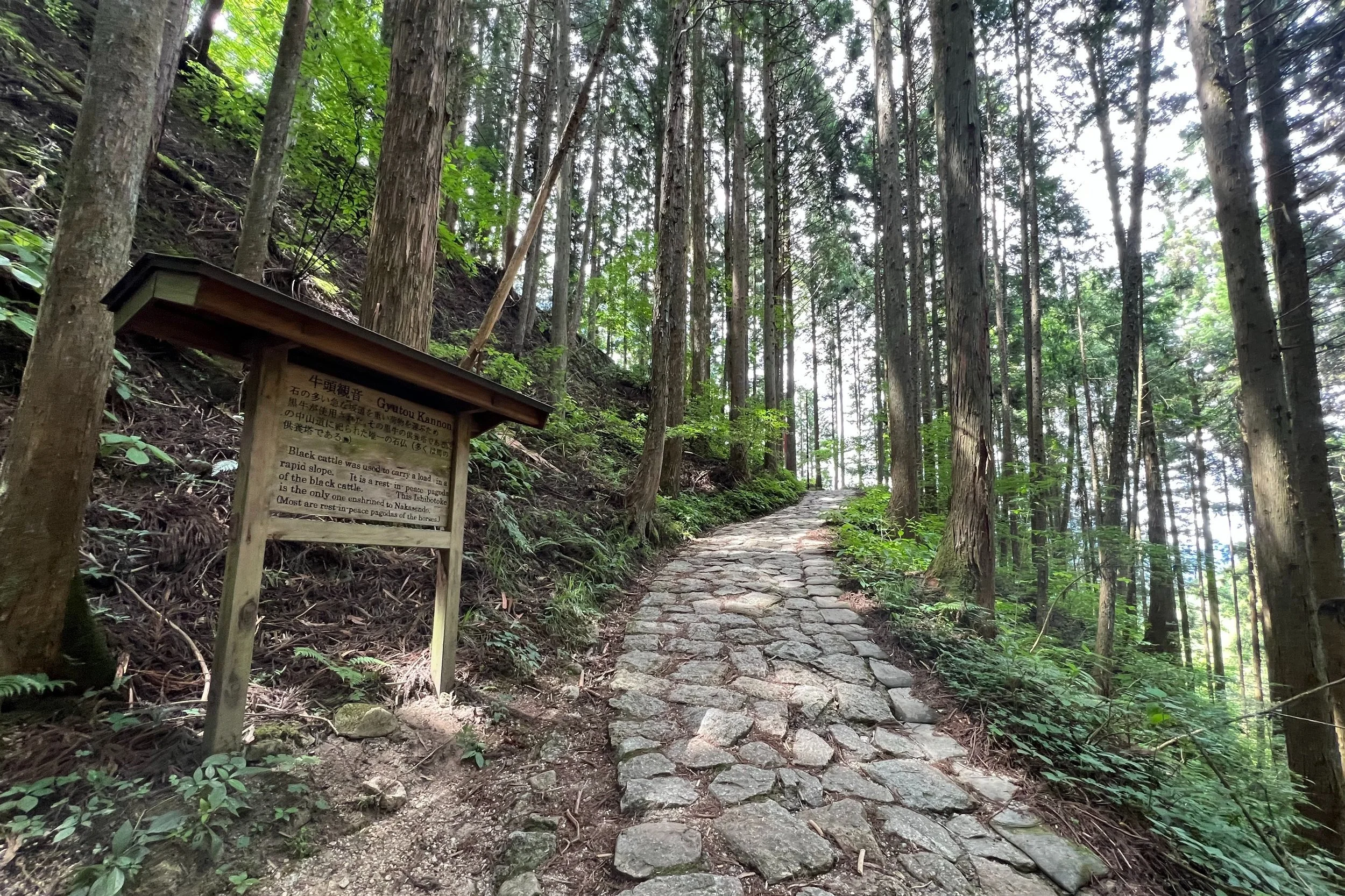
The walk from Magome to Tsumago is roughly 8 kilometres and takes about three hours at a relaxed pace, following stone paths and forest tracks through cedar woods, past waterfalls, rice terraces, and a handful of rural hamlets, with the route well signposted in English. This is the single best-preserved stretch of walkable Nakasendo highway remaining, and it genuinely feels like stepping into the route as Edo-period travellers experienced it — climbing through forest to a pass before descending gently into the Kiso Valley toward Tsumago. Bear bells are provided at intervals along the trail (a real, if minor, precaution in this rural mountain area), and small rest stops with vending machines and basic facilities appear roughly halfway.
What makes the walk remarkable is the layering of history visible along the way — stone markers indicating distances in the old ri measurement system, a waterfall once used by travelling samurai to purify themselves, and teahouses still operating in buildings centuries old. The path is well maintained but genuinely rural; comfortable walking shoes are essential, and the elevation change, while moderate, is enough to feel like real hiking rather than a gentle stroll. For travellers who want a tangible physical connection to old Japan rather than simply viewing preserved buildings, this trail is the highlight of the entire two-day trip.
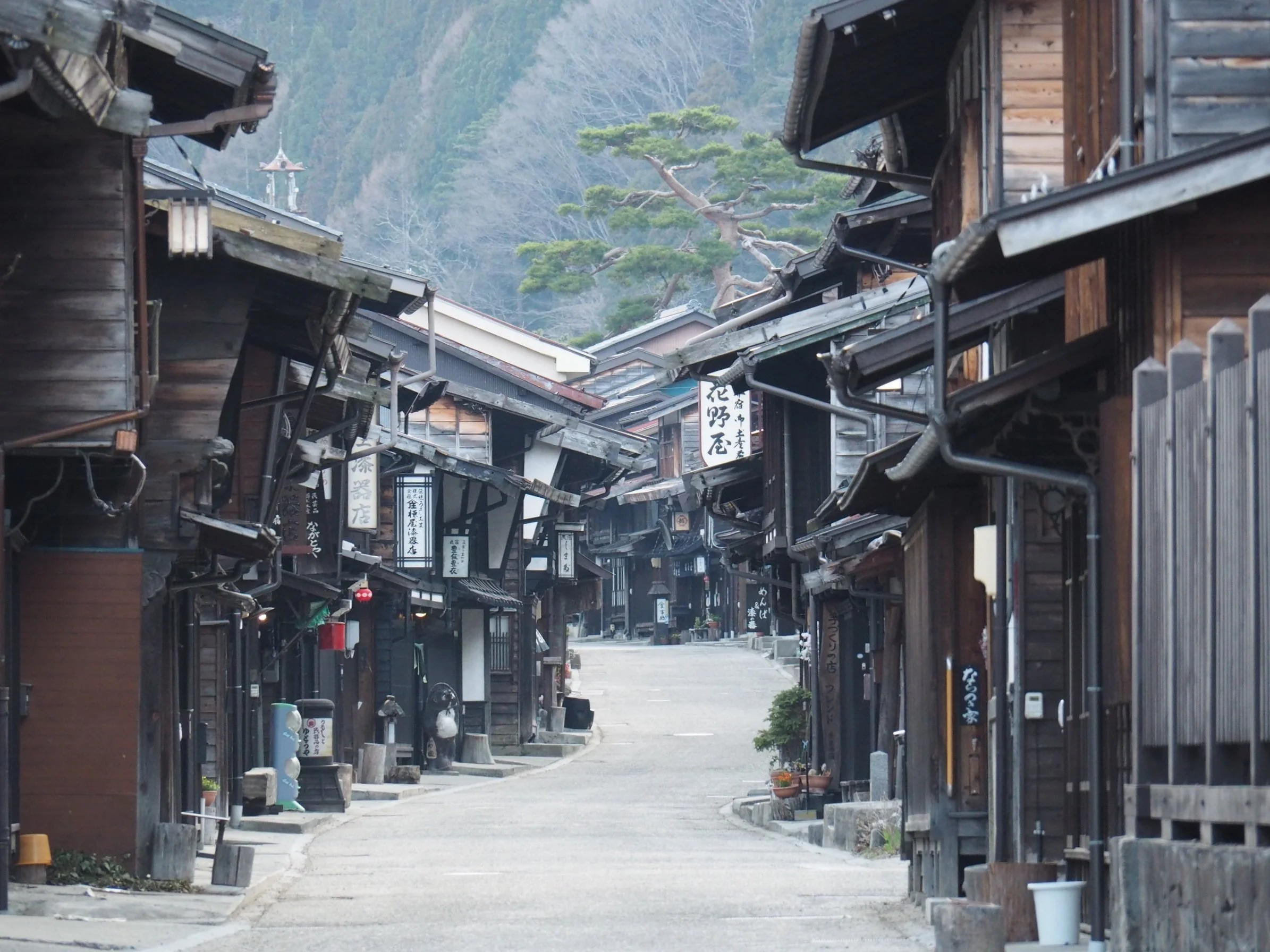
If Magome is impressive, Tsumago is the town that started Japan's entire historic preservation movement. In the 1960s, faced with depopulation and the threat of modern development, local residents enacted strict regulations forbidding the sale, rental, or alteration of traditional buildings along the main street — no vending machines, no visible power lines, no cars during the day. The result, decades later, is the most completely preserved Edo-period townscape in Japan: a single street of dark wooden buildings, latticed windows, and stone gutters that looks, almost without qualification, exactly as it did two hundred years ago. The town's approach to preservation became the model later adopted across Japan, including in Magome itself.
Tsumago's honjin (the inn reserved for travelling feudal lords) and waki-honjin (the secondary inn for lower-ranked officials) are both preserved and open to visitors, offering a detailed look at the rigid social hierarchy embedded in Edo-period travel infrastructure — separate buildings, separate standards of accommodation, all dictated by rank. The town is quieter and smaller than Magome, with fewer shops and a more contemplative atmosphere, particularly in the late afternoon once the day-trip crowds from Magome have started to thin. Walking the full length of the street, with its wooden eaves and stone-lined drainage channels still functioning as designed centuries ago, is as close as most travellers will get to genuinely experiencing the texture of Edo-period rural Japan.
Nagoya Castle was built in 1612 by Tokugawa Ieyasu as a strategic stronghold guarding the approach to Edo, and for centuries was considered one of Japan's three greatest castles. The original keep was destroyed in air raids during the Second World War and rebuilt in concrete in the 1950s, but the castle's most famous feature survived the war intact in storage — the pair of golden shachihoko, mythical tiger-headed, fish-bodied creatures said to protect against fire, that sit atop the main roof and have become a symbol of the city itself. The reconstructed keep houses a museum covering the castle's history and the Tokugawa shogunate, while the grounds include several original structures that escaped the bombing, including corner turrets and gates from the seventeenth century.
The real highlight for many visitors is the Honmaru Palace, an extraordinarily detailed and historically accurate reconstruction completed in 2018 after decades of work, using traditional joinery techniques and craftsmanship to recreate the ornate reception halls used to entertain the Tokugawa shogun on visits to Nagoya. The gold-leafed sliding doors, painted with tigers, leopards, and elaborate nature scenes by Kano school artists, give a sense of Edo-period aristocratic splendour that the concrete main keep, however impressive from outside, cannot match. Combined with the castle's broad moat and stone walls, it's a worthwhile final historic stop before the Shinkansen journey back to Tokyo.
Hitsumabushi is Nagoya's most famous culinary export — grilled freshwater eel (unagi), basted in a sweet soy-based tare sauce, served sliced over rice in a lacquered wooden tub called an ohitsu, and eaten in a deliberately structured three-stage ritual that turns a single dish into three distinct experiences. The first quarter is eaten plain, to appreciate the eel and rice on their own terms; the second is mixed with scallions, wasabi, and nori seaweed for added texture and sharpness; the third is turned into ochazuke by pouring hot dashi broth or green tea directly over the rice, transforming it into something closer to a savoury soup. A final portion, eaten however you preferred the previous three, lets you settle on your favourite style.
The dish emerged from Nagoya's distinct food culture, which favours rich, often sweet-savoury flavours quite different from the lighter Kansai or Edo culinary traditions — a regional identity that also produces miso katsu, tebasaki fried chicken wings, and the city's famous strong, dark miso. After two days of castles, temples, and mountain trails, hitsumabushi makes a fitting final meal before the Shinkansen ride home: a dish you genuinely cannot get properly prepared in Tokyo, eaten in the city where the tradition originated, with the ritual of the three stages giving the meal a natural sense of occasion to close out the trip.
* Guest Shinkansen tickets and overnight Matsumoto hotel booked independently. Terry provides hotel shortlist & coordinates adjacent train seating.
* Comfortable walking shoes essential for the Magome–Tsumago trail — real elevation change over several kilometres.
Everything is covered in your flat rate — Terry pays every train ticket, entry fee, and restaurant bill quietly in the background. No out-of-pocket costs on the day.
Guest Shinkansen tickets (Tokyo ↔ Matsumoto, Nagoya → Tokyo) and overnight Matsumoto hotel are booked independently by guests. Terry coordinates adjacent Shinkansen seating and provides a hotel shortlist near Matsumoto Station.
Comfortable walking shoes essential — the Magome–Tsumago trail involves real elevation change over several kilometres. This tour suits travellers who want genuine physical engagement, not sightseeing from a bus.
Matsumoto, the Kiso Valley, and Nagoya sit largely outside the standard Tokyo-Kyoto tourist corridor, which means even well-known sites like Matsumoto Castle and the Magome-Tsumago trail see a fraction of the crowds found at comparable attractions closer to the main shinkansen line.
The route also has a natural narrative arc — starting in the mountains at Matsumoto, descending through forest on the old Nakasendo highway, and arriving in the very different urban energy of Nagoya by the second evening. Few two-day trips from Tokyo cover this much genuine variety: castle architecture, a major pilgrimage temple, an entire day of forest trail walking between two of Japan's best-preserved historic towns, and a second castle city with its own distinct food culture.
Terry's recommendation: build in the overnight in Matsumoto rather than attempting any version of this as a single day — the trail walk alone deserves unhurried time, and trying to compress both days into one would mean sacrificing exactly the parts of the trip that make it worthwhile.