This two-day route follows the Sagami coast south from Tokyo into a stretch of Japan most visitors never see — starting in Manazuru, a small stone-quarrying and fishing town on a green peninsula jutting into Sagami Bay, then continuing on to Numazu, the gateway to the Izu Peninsula's dramatic west coast. Day one is unhurried: a hilltop castle-ruins park, a shrine overlooking the harbor, a walk out to the sea cliffs at the peninsula's tip, and a small art museum dedicated to a painter who once lived there. Day two shifts to Numazu's working fish market and pine-lined beach with Mt. Fuji rising across Suruga Bay, finishing at Osezaki, a narrow spit of land reaching out into some of the clearest water on this coast. It's a trip built for travellers who want real fishing towns and open coastline rather than another famous circuit.
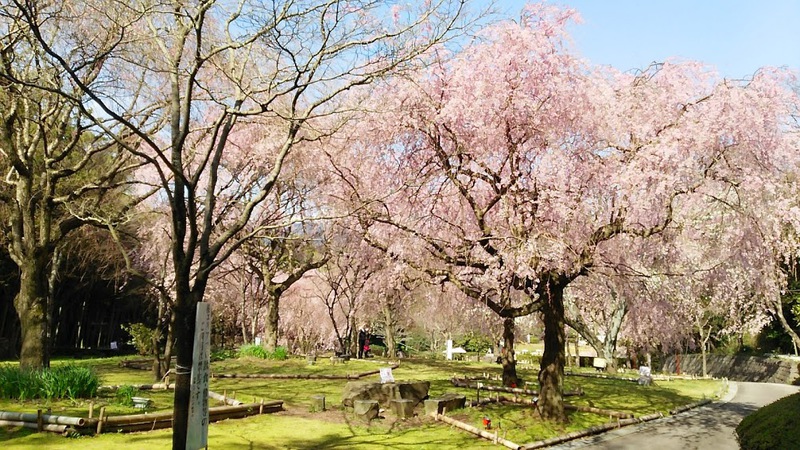
A five-minute walk from Manazuru Station sets the tone for the whole trip — a peaceful hilltop park built on the ruins of a fortress once held by Arai Sanetsugu, a samurai loyal to the Minamoto clan during the Gosannen War of the eleventh century. Almost nothing of the original structure remains, but the site has been reshaped into a garden thick with bamboo and a wide variety of trees, offering elevated views across Manazuru City to the sea beyond. It's a gentle, unhurried introduction to a part of Japan that sees very few foreign visitors, with none of the queues or crowd management found at more famous historical sites.
In spring the park's cherry trees draw a small local crowd for the town's night illumination festival, but on an ordinary day it's usually just the two of you and the sound of wind through the bamboo. Terry treats this first stop as a chance to get oriented — pointing out the shape of the peninsula from above, explaining how Manazuru's stone-quarrying industry shaped the town, and setting up the walk down toward the harbor that follows.
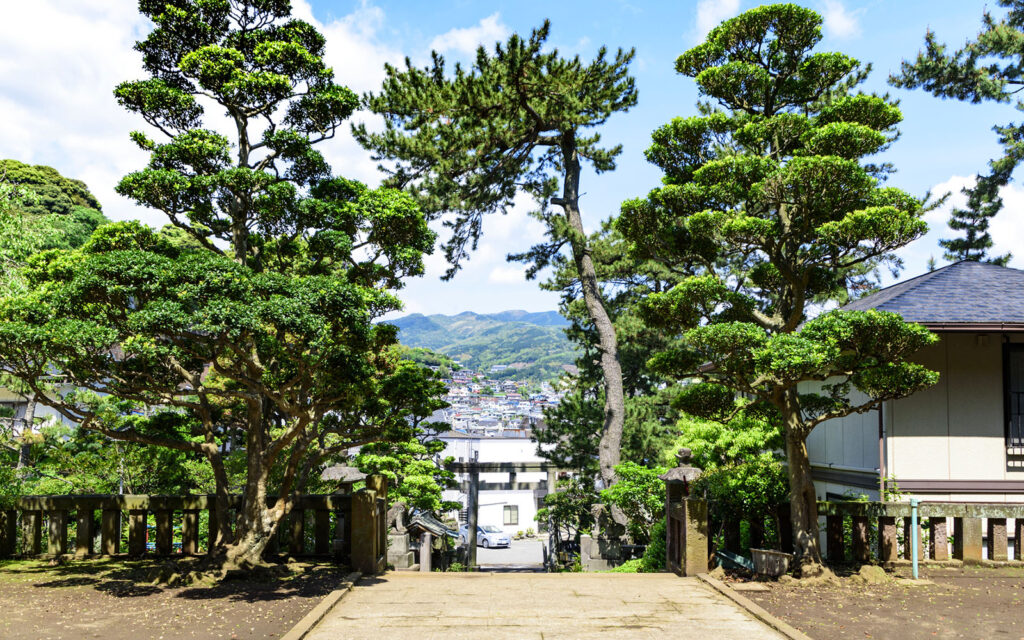
Kibune Shrine sits on a green hill directly above Manazuru's working harbor, said to have been founded in the year 889 and dedicated to Okuninushi, the god of good fortune, business success, and matchmaking. For well over a thousand years it has served as the spiritual anchor for the fishing families below, and every July 27th and 28th it hosts the Kibune Matsuri, one of the three largest boat festivals in Japan, when decorated fishing vessels parade around the harbor accompanied by drumming and a portable shrine carried through the streets.
Outside festival season, the shrine grounds are quiet and largely local — a handful of elderly visitors saying a quick prayer on their way past, rather than tour groups. The view down over the harbor's fishing boats and blue tarpaulins, with the open bay beyond, is a genuine slice of small-town coastal Japan. Terry can walk you through the shrine's protective role in local life and what to look for if you visit during festival season, when the atmosphere here is unlike almost anywhere else on this stretch of coast.
At the far tip of the peninsula, a forested nature park gives way suddenly to open sea — the classic view here looks out toward the Izu Peninsula, the Boso Peninsula in Chiba, and on a clear day, the Izu Seven Islands scattered across the horizon. From the car park, a set of steep stone steps drops down to a rocky beach facing Mitsuishi, three large rocks rising from the water and connected by a heavy sacred rope, said to mark one of the best spots in the region to watch the year's first sunrise on New Year's Day.
The rocks and surrounding coastline are protected as part of a prefectural nature park, and the walk down to the beach — past wind-bent pine trees clinging to the cliff face — has the slightly wild, undeveloped feel that has led some visitors to compare this coastline to Italy's Amalfi coast in miniature. It's a good stretch to slow down: there's no rush here, just open water, salt air, and a rock formation that's meant something to local fishermen for centuries.
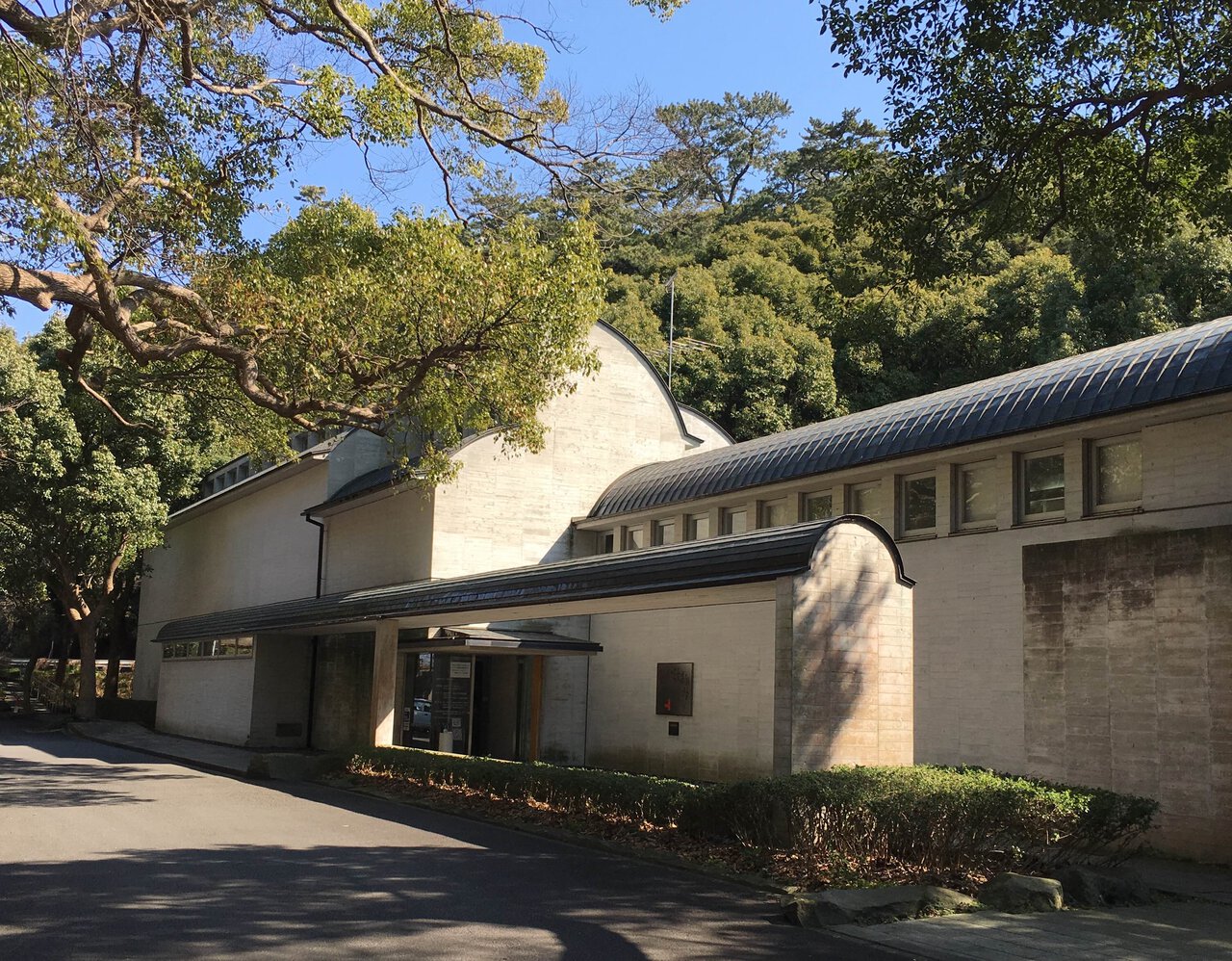
Opened in 1989, this small museum is dedicated entirely to Kazumasa Nakagawa, a western-style painter and the first in his field to receive Japan's Order of Culture, who lived in Manazuru for decades and drew constant inspiration from its coastline. The collection holds several hundred of his vividly colourful paintings, calligraphy, and ceramics, and the museum grounds even include a reconstruction of his workshop, giving a real sense of the town through the eyes of the artist who called it home for most of his working life.
From the museum, it's a short walk back to the harbor for lunch at a long-established local seafood restaurant, where the day's catch — often still moving in the tanks a few hours earlier — is served as sashimi, grilled fish, or a rice bowl piled with whatever came in that morning. This is Manazuru at its simplest and best: no pretense, just a working fishing town feeding its own visitors the same fish it feeds itself.
Senbonhama is one of the most scenic stretches remaining on the old Tokaido highway, a long public beach and park backed by a dense pine grove that has sheltered travellers from the coastal wind for centuries. On a clear day, the view across Suruga Bay puts Mt. Fuji directly in frame, rising over the water with none of the buildings or crowds that clutter more famous viewpoints closer to Tokyo — this is one of the best low-effort Fuji views on the entire Izu approach.
The park also holds the Numazu Imperial Villa Memorial Park, a former Imperial family retreat that gives some sense of why this particular stretch of coast was chosen for royal visits generations ago. It's an easy, flat walk — good for stretching your legs after the morning train from Manazuru — with plenty of benches facing the water for the inevitable photo stop if Fuji is out.
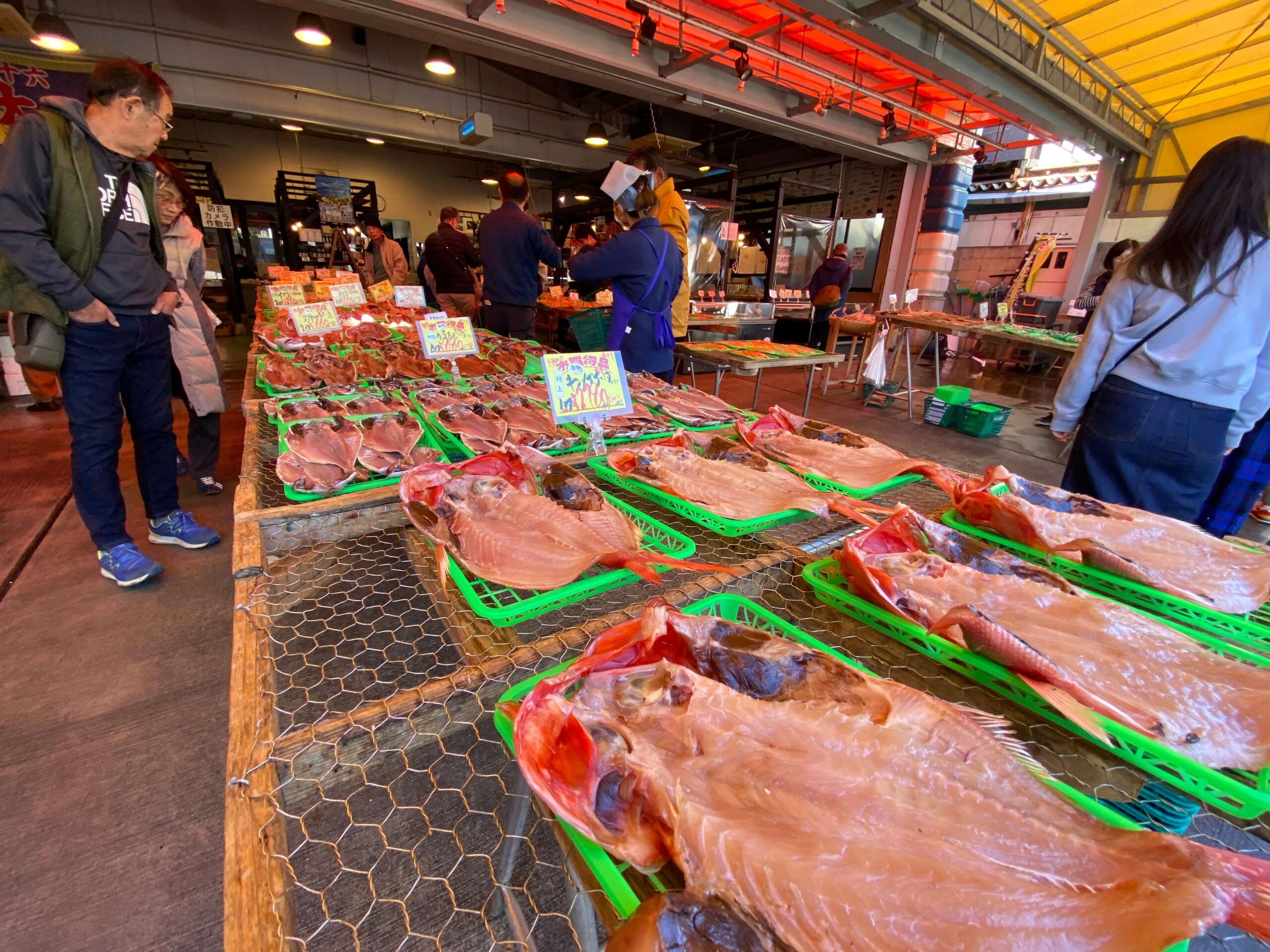
Numazu's port area is built around its fish market, a real working wholesale market rather than a tourist recreation, with the surrounding streets packed full of seafood restaurants, izakaya, and stalls selling the morning's catch straight off the boats. Because Numazu sits far closer to its fishing grounds than Tokyo's markets, the seafood here tends to be exceptionally fresh and noticeably cheaper than comparable bowls in the capital — a generous kaisendon rice bowl piled with sashimi typically runs well under what you'd pay for the same thing near Tsukiji or Toyosu.
The market area has its own particular energy — working fishermen, delivery trucks, and a genuine sense that this town's identity is built entirely around the sea. Terry knows which of the market's restaurants consistently serves the best value and freshest fish, and can help navigate the mostly Japanese-only menus so you get exactly what you came for.
Suruga Bay is one of Japan's deepest bays, plunging to over 2,500 metres just offshore, and this aquarium is built specifically around that fact — showcasing bioluminescent jellyfish, rare deep-sea fish, and specimens found almost nowhere else on public display in Japan. It's a compact, well-curated aquarium rather than a sprawling theme park, with a genuine research angle behind many of the exhibits, since much of what's on display comes directly from trawlers working the bay just outside.
A floor-to-ceiling tank near the entrance holds a large school of sardines and rays that draws most visitors in immediately, but the smaller specimen tanks toward the back — filled with creatures that look more alien than aquatic — are where this aquarium really earns its name. It's a good change of pace after a morning of walking and market browsing, and works well for any travellers wanting a lower-effort indoor stop mid-afternoon.
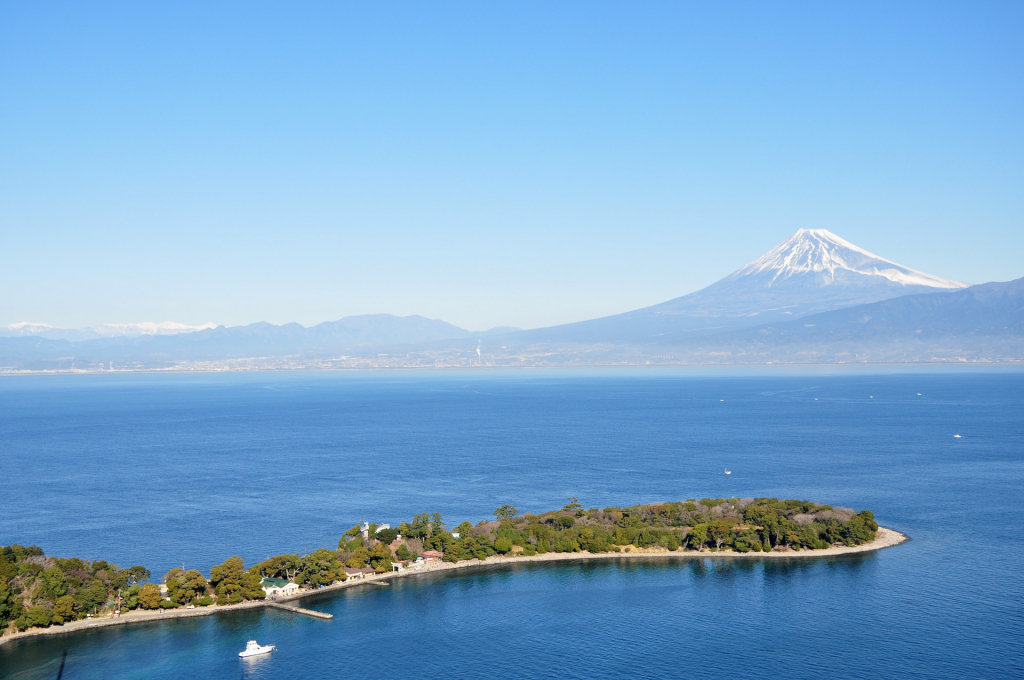
Osezaki is a narrow, tree-lined sandbar reaching out into Suruga Bay, connected to the mainland by little more than a thin strip of land and protected on its inner side by a small shrine dedicated to the sea. The water here is known among Japanese scuba divers as some of the clearest along this coast, sheltered enough to stay calm even when the open bay is choppy, and small hotels catering to divers and snorkelers line the approach road rather than the resort hotels found elsewhere in Izu.
The real appeal is the view back the way you came — from the tip of the sandbar, Mt. Fuji appears again across the water, this time from a completely different angle than Senbonhama's morning view, often with the golden light of late afternoon behind it. It's a quiet, contemplative way to close out two days of coastline before heading to Mishima or Numazu Station for the journey back to Tokyo.
* Guest train tickets and overnight Manazuru/Atami hotel booked independently. Terry provides a hotel shortlist & coordinates the next morning's train.
* Comfortable walking shoes recommended — the Cape Manazuru steps and Osezaki sandbar involve uneven ground.
Everything is covered in your flat rate — Terry pays every train ticket, entry fee, and restaurant bill quietly in the background. No out-of-pocket costs on the day.
Guest train tickets (Tokyo ↔ Manazuru, Numazu → Tokyo) and overnight Manazuru or Atami hotel are booked independently by guests. Terry coordinates the connecting train and provides a hotel shortlist near Manazuru Station.
This is a relaxed-pace trip compared to Terry's mountain or trail-walking tours — ideal for travellers who want real coastal towns, fresh seafood, and open sea views without a demanding physical itinerary.
Manazuru and Numazu sit well outside the standard Hakone-Izu tourist corridor, which means even a place as scenic as Cape Manazuru or Senbonhama Beach sees only a trickle of visitors compared to nearby Hakone or Atami.
The route also builds naturally from quiet to quieter — Manazuru's small-town harbor rhythm on day one, then Numazu's working fish market energy and open Fuji views on day two, closing with the stillness of Osezaki's sandbar at the edge of the bay. It's genuine fishing-town Japan, best paired with an overnight so neither day feels rushed.
Terry's recommendation: this route rewards travellers who've already done Hakone or Kamakura and want the next layer down — real coastal towns that haven't been built up for tourism, with some of the best casual seafood you'll find anywhere near Tokyo.