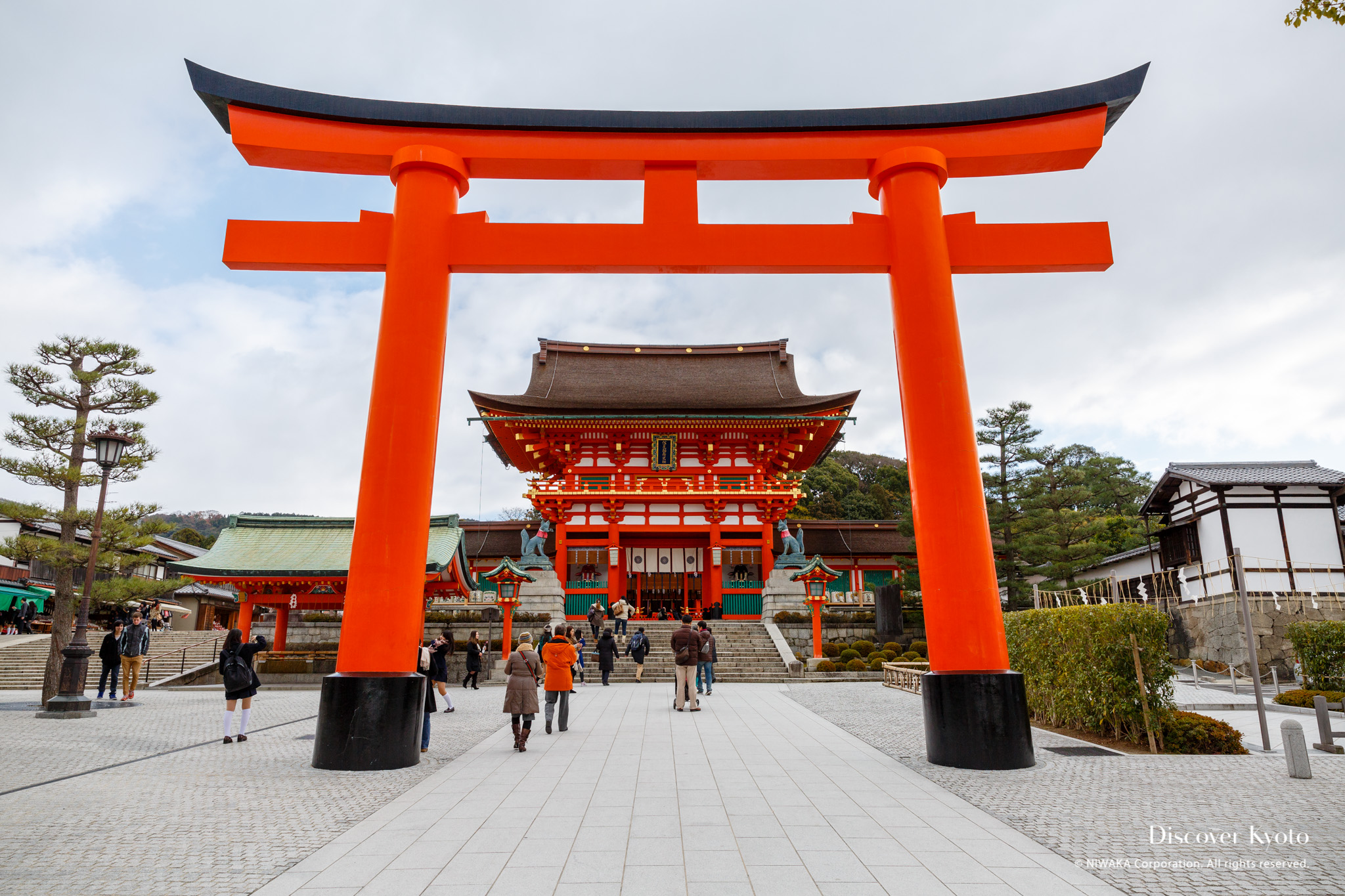
Thousands of vermillion torii gates lining the wooded mountain path at Fushimi Inari Taisha in Kyoto
⛩️ Kansai Escort Tour · Kyoto & Osaka · 2 Days, 1 Night

Kyoto & Osaka — A Seamless Kansai Journey

Your trusted Tokyo guide travels with you the entire way — thousands of torii gates at Fushimi Inari, the wooden stage at Kiyomizu-dera, the geisha streets of Gion, bamboo groves in Arashiyama, then on to Osaka Castle, Dotonbori, and Kuromon Market.

Fushimi Inari · Kiyomizu-dera · Gion · Arashiyama · Osaka Castle · Dotonbori · Kuromon Market

Kyoto and Osaka are the two cities most first-time visitors to Japan wish they had more time for — and the two most overwhelming to navigate independently. This two-day, one-night escort tour solves that problem entirely: Terry travels with you on the Shinkansen from Tokyo, stays overnight in Kyoto, and guides you continuously through both cities without the awkward handoff to an unfamiliar local guide. Day one covers Kyoto's essential sites — the endless orange gates of Fushimi Inari, the dramatic wooden stage of Kiyomizu-dera, the lantern-lit streets of Gion, and the bamboo grove and riverside scenery of Arashiyama. Day two moves to Osaka for the castle, the neon energy of Dotonbori, and the food stalls of Kuromon Market, before returning to Tokyo by Shinkansen in the evening. It's built for travelers — especially groups and families — who want VIP, door-to-door continuity rather than piecing together local guides and self-navigated transit in an unfamiliar region.

DepartureTokyo Station · Shinkansen to Kyoto (~2h15m)
Tour PaceModerate-Active · Significant Walking Both Days
Overnight1 Night in Kyoto · Guest Books Own Hotel
Best ForGroups of 4–6 · First-Time Kansai Visitors
RouteTokyo → Kyoto (Day 1) → Osaka → Tokyo (Day 2)
Highlights
Day One · Kyoto — Shrines, Temples & Historic Streets
Thousands of vermillion torii gates lining the wooded mountain path at Fushimi Inari Taisha in Kyoto
Stop 01 · Iconic Shrine — Morning · 09:00 AM
Thousands of Vermilion Torii Gates

Fushimi Inari Taisha

伏見稲荷大社
📍 View on Google Maps ↗

Fushimi Inari is the head shrine for Inari, the Shinto deity of rice, prosperity, and business success, and it's instantly recognisable as one of the most photographed sites in Japan — a path of thousands of vermilion torii gates climbing the wooded slopes of Mount Inari, each one donated by a business or individual in thanks for prosperity granted. The shrine itself dates back to 711, making it older than the city of Kyoto, and the fox statues found throughout the grounds represent Inari's messengers, often depicted holding a key to the rice granary in their mouths. Walking the full circuit to the summit takes two to three hours, though most visitors walk only as far as the lower viewpoint, which already offers a dramatic, uninterrupted tunnel of gates and excellent photo opportunities without the full climb.

Arriving early is genuinely important here — Fushimi Inari is one of the few major Kyoto sites with no entry fee and no closing time, which means it draws enormous crowds by mid-morning, especially on the lower paths near the main gate. Terry recommends arriving at opening to experience the gates in relative quiet, when the morning light filters through the vermilion wood and the path feels closer to how it would have been experienced by pilgrims centuries ago. Smaller sub-shrines and fox statues line the upper paths, along with teahouses serving inari-zushi — sweet fried tofu pouches stuffed with rice, named for the shrine itself.

💡 Free entry, no closing time. Terry recommends the first hour after opening for the best light and smallest crowds — most tour groups don't arrive until 10am or later.
The wooden stage of Kiyomizu-dera temple overlooking the forested Higashiyama hills in Kyoto
Stop 02 · UNESCO World Heritage — Late Morning · 11:00 AM
The Wooden Stage Built Without a Single Nail

Kiyomizu-dera

清水寺
📍 View on Google Maps ↗

Kiyomizu-dera takes its name — "Pure Water Temple" — from the Otowa Waterfall that flows beneath the main hall, its three separate streams believed to grant longevity, success in studies, and a fortunate love life to those who drink from them. The temple's most famous feature is its vast wooden stage, built out from the hillside on a lattice of timber pillars using traditional joinery techniques with no nails, supporting visitors high above the valley below with sweeping views across Kyoto, particularly spectacular during cherry blossom season and autumn foliage. The current structure dates to 1633, a reconstruction of a temple founded in 778, and the engineering of the stage — designed to flex slightly during earthquakes rather than rigidly resist them — remains a celebrated example of pre-modern Japanese carpentry.

The approach to the temple, up the steep and historic Higashiyama district, is as much a part of the experience as the temple itself — narrow lanes lined with traditional wooden machiya buildings, shops selling pottery, sweets, and pickles, leading up through the iconic Sannenzaka and Ninenzaka slopes. These preserved streets are some of the best-maintained historic districts in Kyoto, and walking them in the late morning light, with Kiyomizu-dera's pagoda visible above the rooftops, gives a strong sense of the city's identity as a place where the old urban fabric has been carefully protected rather than redeveloped.

💡 Entry is ¥400. The walk up through Sannenzaka and Ninenzaka is steep and can get crowded — comfortable shoes are essential, and Terry can point out the best mid-route teahouses for a rest.
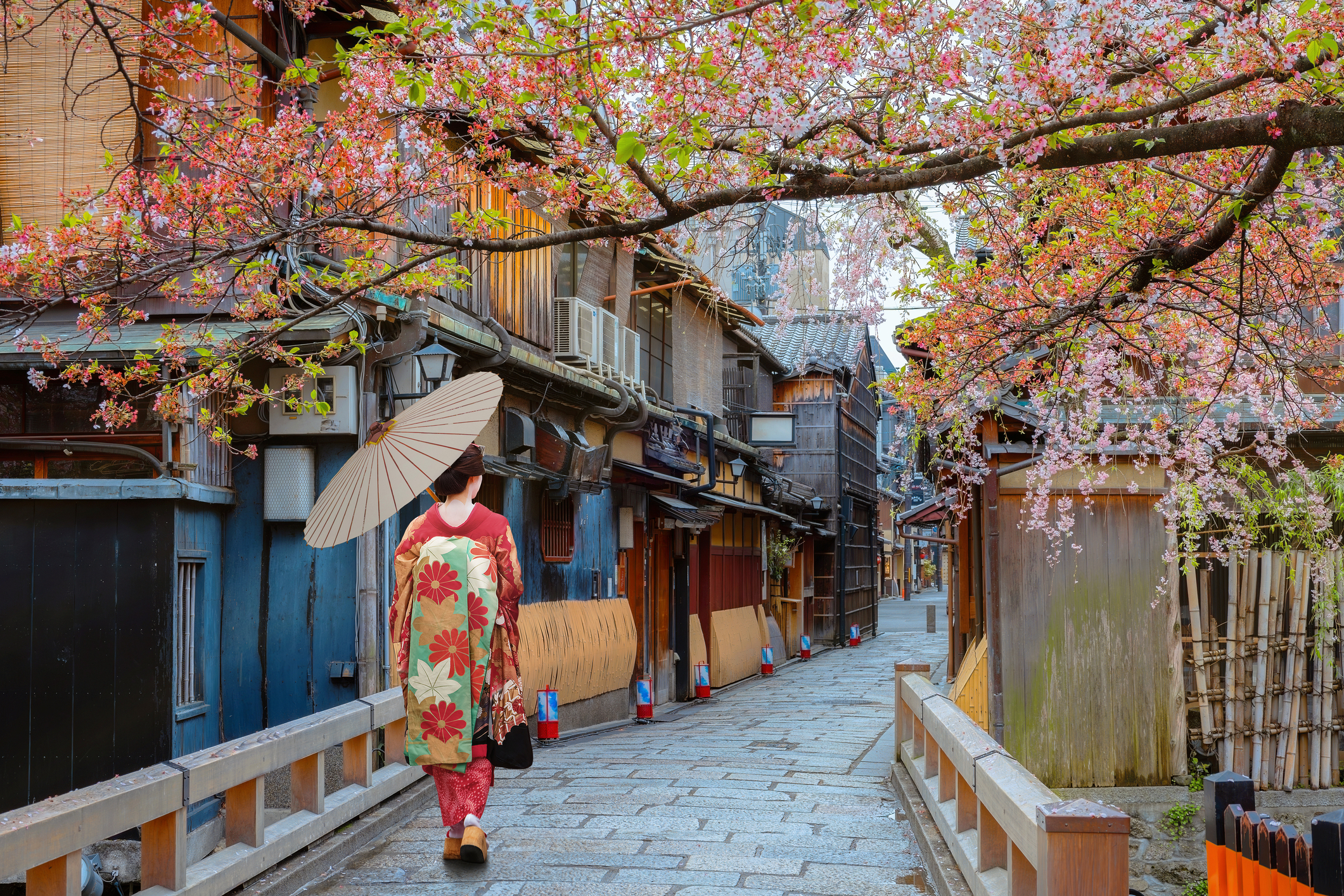
Traditional wooden machiya buildings lining a lantern-lit street in Kyoto's historic Gion geisha district
Stop 03 · Historic Geisha District — Afternoon · 14:00 PM
Kyoto's Famous Geiko & Maiko Quarter

Gion

祇園
📍 View on Google Maps ↗

Gion is Kyoto's most famous geisha district, where wooden machiya teahouses line narrow streets that have remained largely unchanged since the Edo period, when the area developed to serve travellers visiting nearby Yasaka Shrine. The district is still home to working geiko (Kyoto's term for geisha) and maiko (apprentice geisha), who can occasionally be glimpsed hurrying between appointments in the early evening, dressed in elaborate kimono with white-painted faces and elaborate hairstyles — a sight that draws considerable, sometimes excessive, attention from visitors, which has led to strict photography restrictions on certain side streets to protect their privacy. The main thoroughfare, Hanami-koji, is lined with exclusive ochaya (teahouses) where entertainment is by invitation and connection only, giving the district an air of genuine, ongoing tradition rather than a museum reconstruction.

Beyond the geisha culture, Gion offers some of Kyoto's best-preserved traditional architecture — wooden lattice facades, stone-paved lanes, and the picturesque Shirakawa canal lined with willow trees and traditional restaurants, particularly atmospheric in the late afternoon as lanterns begin to light. Yasaka Shrine, painted in vivid vermilion, sits at the district's eastern edge and is worth a short visit for its own striking architecture and role as the spiritual anchor of the neighbourhood. Walking Gion slowly, rather than rushing through, is the best way to absorb its particular blend of living tradition and architectural preservation.

💡 Photography of maiko and geiko on private streets like Hanamikoji's side lanes is restricted with fines for violations — Terry will guide you to the right spots for respectful photos. Early evening offers the best chance of a genuine sighting.
Towering bamboo stalks lining the path through the Arashiyama bamboo grove in Kyoto
Stop 04 · Bamboo Grove & River — Late Afternoon · 16:00 PM
Towering Bamboo & the Katsura River

Arashiyama

嵐山
📍 View on Google Maps ↗

Arashiyama sits on Kyoto's western edge, where the Katsura River cuts through forested hills that have drawn aristocrats, poets, and artists for over a thousand years as a retreat from the city. Its most famous feature is the bamboo grove — a path through towering green stalks that grow so densely the sunlight filters down in narrow shafts, and the wind through the bamboo produces a distinctive sound officially recognised by the Japanese government as one of the country's "100 Soundscapes to Preserve." The grove is a short walk and can feel crowded at midday, but the scale and otherworldly green light of the bamboo make it worth the visit regardless of foot traffic.

Beyond the grove, Arashiyama offers the iconic Togetsukyo Bridge spanning the Katsura River with the forested mountains as a backdrop, particularly stunning during cherry blossom and autumn foliage seasons, along with Tenryu-ji Temple — a UNESCO World Heritage site with one of Japan's most celebrated garden designs, using the surrounding mountains as "borrowed scenery" within its composition. The area has a noticeably different pace from central Kyoto — more rural, more forested, with traditional rickshaw pullers (jinrikisha) offering rides through the quieter backstreets for those wanting a different way to experience the district before heading back into the city for the evening.

💡 The bamboo grove is free and always open — Terry recommends visiting in late afternoon as day-trip crowds from central Kyoto start to thin. Tenryu-ji garden entry is ¥500.
Day Two
Osaka — Castle, Neon & Street Food
Morning train from Kyoto to Osaka (~30 min) · Evening Shinkansen back to Tokyo
The green and gold main keep of Osaka Castle rising above its stone fortress walls
Stop 05 · Historic Castle — Morning · 10:00 AM
Toyotomi Hideyoshi's Fortress of Unification

Osaka Castle

大阪城
📍 View on Google Maps ↗

Osaka Castle was built in 1583 by Toyotomi Hideyoshi, one of the three great unifiers of feudal Japan, as a statement of his power following the consolidation of the country after a century of civil war. The castle played a central role in some of the most consequential events in Japanese history, including the sieges that ultimately ended the Toyotomi clan's rule and cemented the Tokugawa shogunate that would govern Japan for the next two and a half centuries. The current main keep is a 1931 concrete reconstruction, rebuilt again after wartime damage, but the castle's massive stone walls — some blocks weighing well over 100 tons — and wide moats are original or faithfully reconstructed, conveying the sheer physical scale of feudal Japan's most ambitious military architecture.

Inside, the museum traces the castle's history and Hideyoshi's rise from a peasant-born foot soldier to the most powerful man in Japan, with English-language displays and an observation deck at the top offering panoramic views across the modern Osaka skyline — a striking contrast between the centuries-old stone base and the contemporary city surrounding it. The surrounding park is one of Osaka's most popular green spaces, particularly during cherry blossom season, and the approach across the inner moat and through the castle's massive gates gives a real sense of the fortress's original defensive purpose.

💡 Museum entry is ¥600. The castle grounds are extensive — Terry plans the route to take in the best wall and moat views without unnecessary backtracking.
Illuminated neon signs and the Glico running man billboard along the Dotonbori canal in Osaka
Stop 06 · Osaka's Entertainment Heart — Afternoon · 13:30 PM
Neon Signs, Canal Views & Street Food

Dotonbori

道頓堀
📍 View on Google Maps ↗

Dotonbori is Osaka's most famous entertainment and dining district, a canal-side strip defined by enormous, theatrical signage — most iconically the running Glico Man, illuminated since 1935 and now one of the most photographed advertising signs in the world — alongside giant mechanical crabs, dragons, and puffer fish marking restaurant entrances in a style of unapologetic visual spectacle unique to Osaka. The district developed from the Edo period as a theatre quarter along the Dotonbori canal, and while the kabuki and bunraku theatres that once defined it have mostly given way to restaurants and shopping, the area retains its identity as the place where Osaka comes to eat, drink, and be entertained, day and night.

Food is the real draw here — Dotonbori is considered the spiritual home of Osaka's most famous street foods, particularly takoyaki (battered octopus balls, crisp outside and molten inside) and okonomiyaki (savoury cabbage pancakes), both dishes embodying Osaka's reputation as kuidaore — "eat until you drop" — a local philosophy of food as the city's central cultural pursuit. The canal itself, lined with restaurant terraces and crossed by several pedestrian bridges, is particularly striking after dark when the full scale of the neon signage reflects in the water, making an evening visit, if timing allows, significantly more atmospheric than a daytime walk-through.

💡 Try takoyaki from one of the small stalls rather than the larger chain restaurants for the most authentic version. Terry can recommend a specific stand with consistently excellent quality near the main bridge.
Fresh seafood and street food stalls lining the covered arcade of Kuromon Ichiba Market in Osaka
Stop 07 · "Osaka's Kitchen" — Late Afternoon · 16:00 PM
190 Years of Fresh Seafood & Produce

Kuromon Ichiba Market

黒門市場
📍 View on Google Maps ↗

Kuromon Ichiba Market has operated since the early 1800s, originally as a fish market serving the restaurants and merchants of the surrounding district, and has earned the nickname "Osaka's Kitchen" for its role supplying the city's famously food-obsessed culinary scene. The covered arcade runs nearly 600 metres and houses roughly 150 stalls and shops, with fresh seafood remaining the heart of the market — tanks of live crab, towers of fresh oysters, and skewers of grilled scallops and wagyu beef available to eat immediately at the stall, a format that has made Kuromon increasingly popular with visitors wanting to sample Japan's seafood culture without committing to a full restaurant meal.

Beyond seafood, the market sells fresh produce, knives, pickles, and prepared foods, and walking its length offers a genuine, working-market atmosphere distinct from the more polished food halls found in department stores — vendors calling out prices, the smell of grilling seafood, and a level of bustle that reflects the market's continued role serving local restaurants as well as visitors. As the final stop before the return Shinkansen to Tokyo, Kuromon offers a fitting way to close out the trip — a last taste of Osaka's food culture, casual and unhurried, before the journey home.

💡 Most stalls accept cash only and prices are per skewer or piece, not per weight — Terry can help navigate ordering at the busier stalls. Budget ¥2,000–3,000 per person for a satisfying grazing-style late lunch.
Kansai Escort Tour Pricing

Pricing for this overnight tour works differently from Terry's single-day Tokyo tours, since it includes Terry's own travel, lodging, and a full day each in two cities. Two pricing models are outlined below as a starting point — final rates to be confirmed.

Base Rate + Travel Surcharge

Best for groups of 4–6 — splits the surcharge across guests
¥100,000 guiding (2 days)
+ ¥55,000 flat Kansai travel surcharge (covers Terry's Shinkansen, hotel, local transit)
Total package: ¥155,000 · ~¥25,800/person for a group of 6

All-Inclusive Flat Rate

Best for solo travelers & couples — one simple price
¥230,000 total (2 days)
Includes Terry's premium guiding fee, Green Car Shinkansen, central Kyoto hotel, and private taxi coordination
Solo: ¥230,000 · Couple: ¥115,000/person
What's Included
  • Continuous private guiding — both days, door to door
  • Terry's own round-trip Shinkansen from Tokyo
  • Terry's overnight hotel accommodation in Kyoto
  • Terry's local Kansai transit (subway, bus, taxi)
  • Fushimi Inari, Kiyomizu-dera, Gion & Arashiyama in Kyoto
  • Osaka Castle, Dotonbori & Kuromon Market in Osaka
  • Station navigation & luggage management for groups
  • Seamless continuity — no handoff to a new local guide
Good to Know

Guests are responsible for their own Shinkansen tickets, local transit fares, entrance fees to all temples, shrines, and museums (for both guests and Terry), and all meals and refreshments throughout both days.

Guests book their own overnight accommodation in Kyoto independently — Terry can recommend hotels near the meeting point to keep the morning departure simple.

This tour suits groups of 4–6 particularly well, since the flat Kansai travel surcharge splits across more people. Solo travelers and couples are welcome under the all-inclusive flat-rate model, geared toward those who value VIP, simplified pricing.

Why Book a Tokyo-Based Escort for Kansai

Managing a group of four to six people with luggage through Tokyo Station and Shin-Osaka Station is one of the most stressful parts of any Japan itinerary — Terry secures adjacent Shinkansen seating and the mandatory oversized baggage reservations in advance, and handles the logistics of two major station transfers so your group doesn't have to.

Just as importantly, you keep the same guide the entire way. Many travelers piece together a Tokyo guide and then a separate local Kyoto or Osaka guide, losing the rapport and trust built on day one the moment they arrive in Kansai. With Terry, that continuity carries through both days and both cities.

This page is currently a working draft — pricing, included stops, and the day-by-day pacing are all open to adjustment as Terry finalizes the offering.

Interested in Kyoto & Osaka?

Seven highlights across two cities, one continuous guide the whole way — get in touch to discuss dates and group size.