🌊 Coastal Shrines · Retro Trams · Samurai History
Enoshima & Kamakura
A comprehensive full-day escape tracking from the rugged sea caves and local markets of Enoshima Island to the monumental temples and hidden trails of ancient Kamakura.
This curated day journey blends two of the most rewarding coastal regions within 90 minutes of Tokyo. From the island shrine layout of Enoshima with its coastal sea paths and lively street markets, we transition via the vintage Enoden train line into the mountain valley architecture of Kamakura. Experience an expertly balanced itinerary blending giant iconic shrines with peaceful, off-the-beaten-path paths that casual tourists miss.

Enoshima's Benzaiten Nakamise-dori is a roughly 300-metre covered approach street that has welcomed pilgrims and travellers since the Edo period, when Enoshima Shrine became one of the most popular pilgrimage destinations within reach of Edo (old Tokyo). The street still functions much as it did then — a tightly packed run of shops selling fresh shirasu (whitebait), a Shonan coast speciality served raw, dried, or fried in everything from rice bowls to crackers, alongside grilled seafood skewers, takosen (whole octopus pressed flat and dried into a giant cracker), and a variety of traditional sweets. Walking up the gentle slope toward the shrine torii gate at the top, with stalls on both sides and the smell of grilled seafood in the air, gives an immediate sense of arriving somewhere that has been a destination for a very long time. The street is busiest from late morning onward, so arriving early gives the best combination of an active atmosphere and manageable crowds.
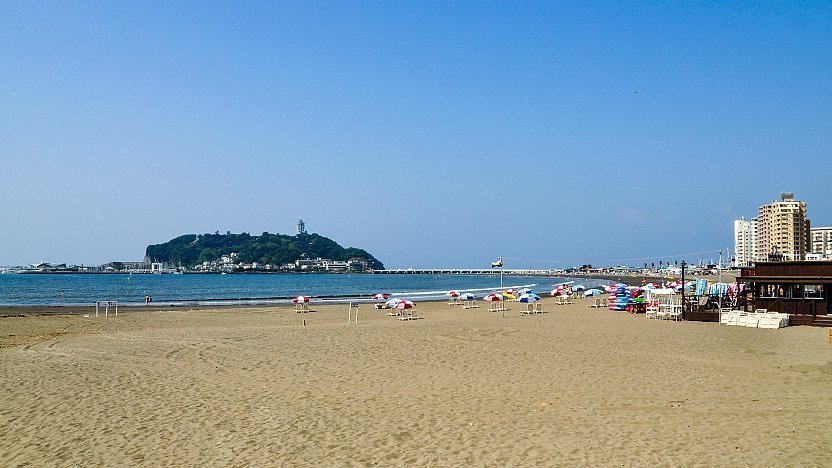
Enoshima is a small tied island connected to the mainland by a 600-metre causeway bridge, and has been one of the most important sacred sites on the Shonan coast since the legend of its creation: according to tradition, the island rose from the sea in the 6th century when the goddess Benzaiten descended to subdue a fearsome five-headed dragon that had been terrorising the local population. Enoshima Shrine, dedicated to Benzaiten as the goddess of fortune, beauty, music, and the arts, is actually three interconnected shrines spread across the island's hillside, reached via a series of escalators and stone steps through dense subtropical vegetation. Near the summit, the Sea Candle — a modern observation tower — gives sweeping views back across Sagami Bay to the Shonan coastline and, on clear days, to Mount Fuji rising beyond. The far side of the island descends to the Iwaya Caves, a pair of natural sea caves that have been used as a site of religious practice and pilgrimage for centuries, now lit by lanterns and candles as visitors walk through.
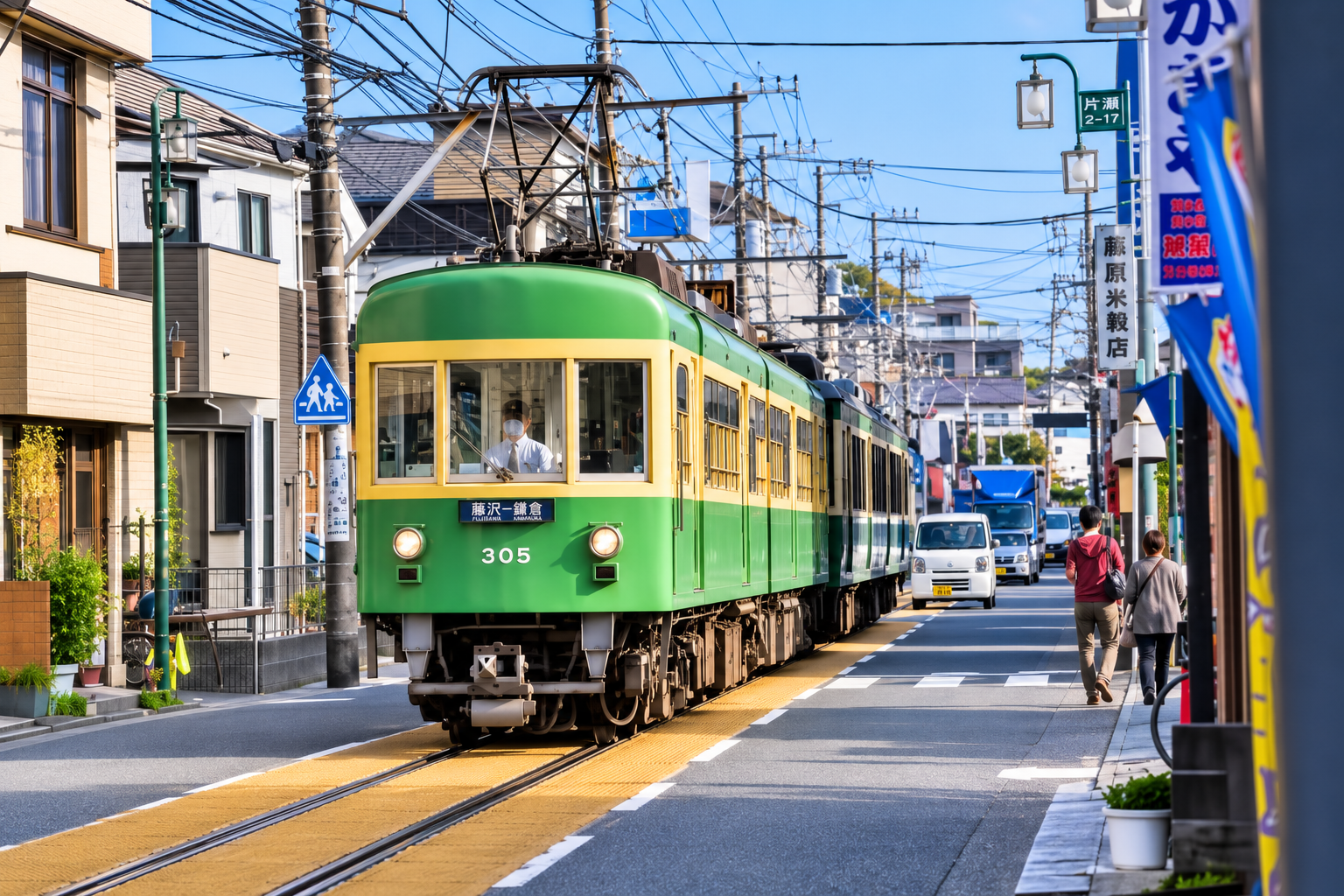
The Enoshima Electric Railway — universally known as the Enoden — has been running along this stretch of the Shonan coast since 1902, making it one of the oldest railway lines still operating in Japan, and its short, single-car trains rattling along narrow tracks between houses, gardens, and right beside the sea have become an iconic image of the Kamakura area in their own right. For much of its 10-kilometre route the line runs so close to residential buildings that the train seems to brush past people's gardens and washing lines, a strange and charming juxtaposition of everyday suburban life and a working railway. The most celebrated section runs along the coast between Enoshima and Kamakura-Koko-mae, where the track runs directly beside the beach with nothing between the train and the Pacific Ocean — a view that has appeared in countless films, anime, and album covers, and remains one of the most photographed train journeys in Japan.
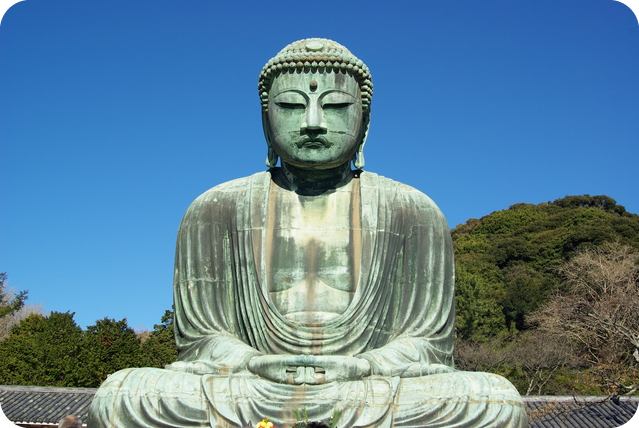
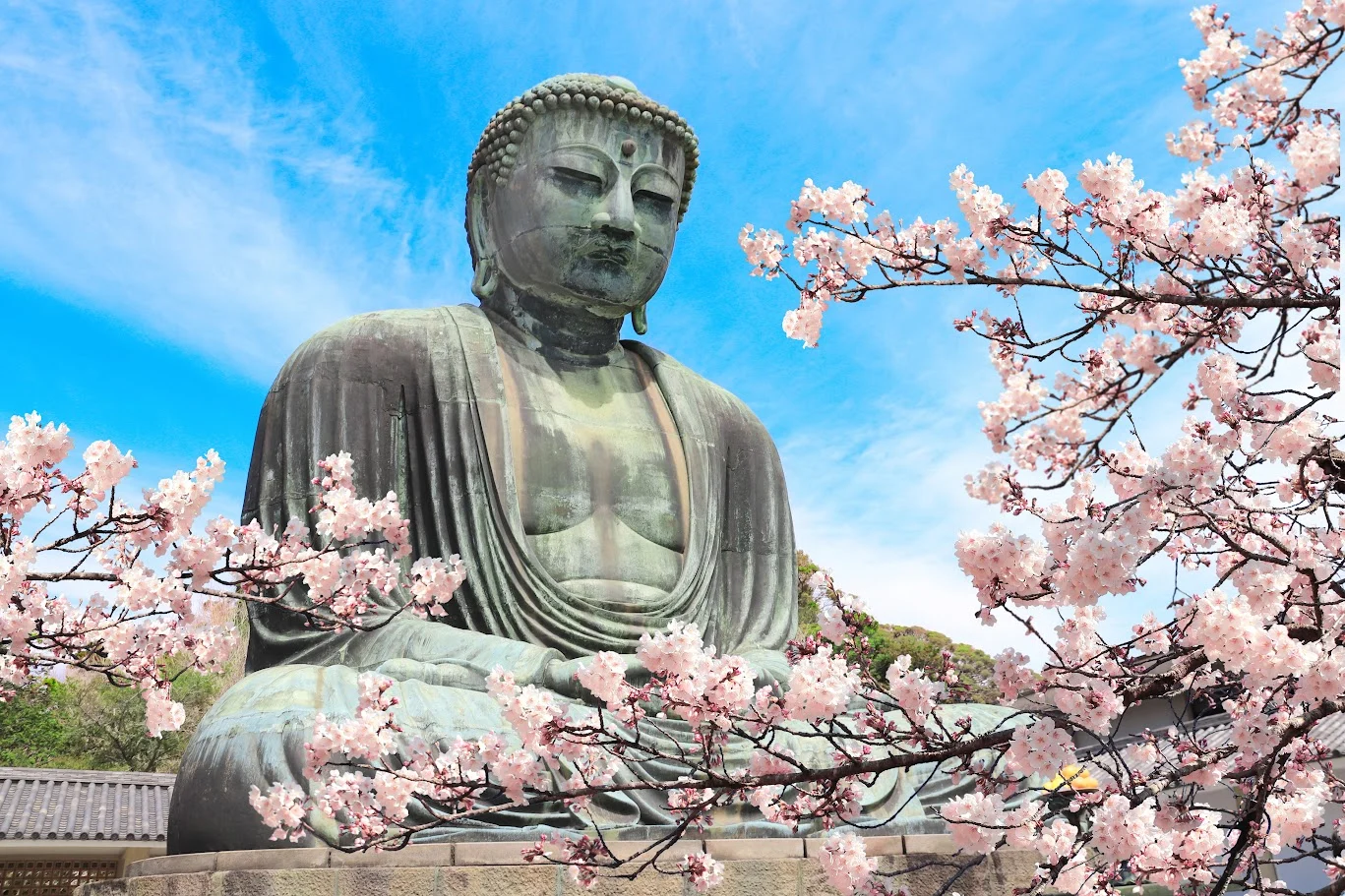
The Great Buddha of Kamakura — a 121-ton bronze statue of Amida Buddha cast in 1252 — sits in the open air at Kotoku-in temple, having lost the wooden hall that originally housed it to a tsunami in 1498. Standing nearly 12 metres tall, it's the second-largest bronze Buddha in Japan and one of the most recognisable images of the Kamakura period, the era when this city served as the de facto capital of Japan and the seat of the first shogunate. A short walk away, Hase-dera occupies a hillside site with terraced gardens overlooking Sagami Bay, and houses a 9-metre wooden statue of Kannon, the eleven-headed bodhisattva of mercy, gilded and considered one of the largest wooden Buddhist statues in Japan. The temple complex also includes a cave shrine, a small museum, and views from the upper terrace that take in the whole sweep of the bay — a striking contrast between the monumental bronze calm of the Buddha below and the more intimate, garden-like atmosphere of Hase-dera above.

Tsurugaoka Hachimangu is the spiritual centre of Kamakura and was the protective shrine of the Minamoto clan, the samurai family that established Japan's first shogunate here in 1192 after Minamoto no Yoritomo defeated his rivals and was appointed shogun by the emperor — effectively founding the system of military rule that would govern Japan for the next 700 years. The shrine's grand approach, the Dankazura, runs in a straight line from the sea toward the shrine along a raised stone walkway originally built in the 12th century, flanked by cherry trees that make it spectacular in late March and early April. Within the grounds, two ponds known as the Genpei ponds were designed with deliberate symbolism — one planted with white lotuses representing the Minamoto clan, the other with red lotuses representing their rivals the Taira, a piece of 12th-century landscape propaganda that survives intact today. From the main shrine steps, the approach continues down into Komachi-dori, Kamakura's busiest shopping street, lined with craft shops, snack stalls, and the dove-shaped cookies (hato sabure) that have become a local specialty.

Zeniarai Benzaiten is one of Kamakura's most atmospheric and least obvious sights, reached through a low stone tunnel cut directly through a cliff face — a deliberately humble entrance to a shrine that, according to legend, was founded in 1185 after the shogun Minamoto no Yoritomo had a dream in which a deity instructed him to find a hidden spring in the northwest hills and worship there to bring peace to the country. The shrine takes its name — "money-washing Benzaiten" — from the tradition of washing coins in the sacred spring water that flows through the shrine grounds, said to multiply the washed money many times over if invested wisely afterward. Visitors take a basket, fill it with their coins, and rinse them in the spring water using ladles provided at the site, a ritual that's been performed here for centuries and remains genuinely practiced rather than purely for show. The shrine sits in a small natural amphitheatre formed by the surrounding hills, with little baskets, candles, and offerings scattered throughout — a quiet, slightly mysterious atmosphere very different from the grand scale of Tsurugaoka Hachimangu earlier in the day.

Kita-Kamakura — "north Kamakura" — is a quiet valley district north of the main town, framed by forested hills and home to several of the most important Zen temples in Japan. The area developed during the Kamakura period as a centre for Rinzai Zen Buddhism, which arrived from China in the 13th century and found particular favour with the samurai class, whose discipline and austerity resonated with Zen's emphasis on direct experience over doctrine. Engakuji, the largest of Kita-Kamakura's temples, was founded in 1282 by the regent Hojo Tokimune, reportedly to console the souls of those who died defending Japan against the Mongol invasions of 1274 and 1281. Its grounds spread across a wooded hillside, with weathered wooden halls, a bell that is among the oldest and most famous in Japan, and a series of sub-temples each maintaining their own small gardens and meditation spaces. The atmosphere here, particularly compared to the busier sites earlier in the day, is genuinely contemplative — the cedar forest muffles sound, and the temple buildings have the unhurried, slightly worn dignity of places that have been quietly used for their original purpose for over 700 years.
This active coastal tour covers ~10km of walking with uneven stone stairs. Comfortable walking shoes essential.
* Terry's personal Freepass, admissions, and lunch are also included — no hidden costs on the day.
Wear sturdy walking shoes with good grip — the Enoshima sea cave paths and Kamakura temple stone stairs are uneven and can be slippery in wet weather.
Everything is covered in your flat rate — no out-of-pocket costs on the day. Terry handles all tickets, tram gates, and restaurant bills quietly in the background.
All guiding is strictly private — just your group with Terry. No strangers, no group schedules, no rushing.
Because Enoshima and Kamakura sit within separate coastal valleys, this loop naturally demands a fair bit of walking (~10km) across mixed pavement, stairs, and rustic temple paths.
Since this is a completely tailored, private experience, Terry seamlessly syncs tracking options to accommodate physical pacing changes or custom alternative travel steps without any stress.