🍱 Culinary Traditions · Local Flavors
Food & Culture
Ramen, sushi, izakayas & street food — eat your way through Tokyo with a local.
Japanese food culture runs far deeper than sushi and ramen. This tour is for people who want to eat like a local — navigating standing ramen bars, trying seasonal street food, sitting at an izakaya counter with a cold beer while Terry orders in Japanese. Food is the best way into a culture, and Terry knows exactly where to take you.

Tokyo's street food culture is not a tourist attraction — it is a living, daily system of feeding people that has operated in the same neighbourhoods for generations, largely invisible to visitors who follow the main roads. Takoyaki, the grilled octopus balls that originated in Osaka and became a fixture of Tokyo's festival and market culture, are made fresh on iron griddle plates that have been seasoned by years of use; the best ones come from stalls that have been on the same corner for decades, not the branded chains that cluster around major stations. Yakitori — grilled chicken skewers over bincho charcoal — divides further into an entire vocabulary of cuts and preparations that most visitors never encounter: negima (thigh and spring onion), tsukune (minced chicken with egg yolk), kawa (crispy skin), and the organ cuts that the serious charcoal counters consider their best work.
Tamagoyaki — the rolled sweet omelette made in a rectangular pan with practised layering movements — is one of the benchmark dishes for judging a neighbourhood food stall, because there is nowhere to hide in its simplicity. The wagashi sweets that punctuate the morning — small seasonal confections of red bean paste, mochi, and rice flour shaped to reflect the current month's flowers or festivals — represent a tradition of edible aesthetics that has been in continuous refinement since the Edo period. Terry moves through all of this not as a food tour checklist but as a morning of eating the way the neighbourhood eats.
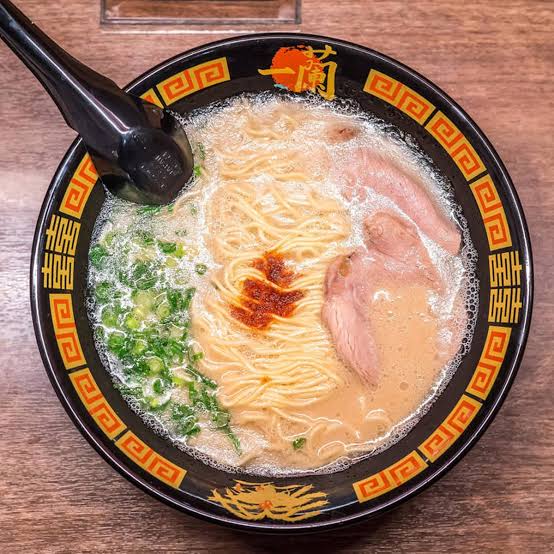
Ramen is the most technically complex fast food on earth — a dish that took its basic form from Chinese noodle traditions, was transformed by Japanese cooks over the course of the 20th century into something entirely distinct, and has since fractured into a constellation of regional and stylistic variations that Japanese enthusiasts spend serious time and money pursuing. Tokyo ramen has its own distinct identity: a soy-based tare mixed into a clear or lightly cloudy chicken or dashi broth, with thin straight noodles, a slice of chashu pork, a soft-boiled marinated egg, and sheets of nori — a restrained, precise bowl that rewards attention to the quality of each element rather than the richness of any single one.
The ramen shop experience itself is a specific culture worth understanding before you walk through the door. Most serious ramen shops operate on a ticket machine system — you select and pay for your bowl before sitting down, customising firmness of noodle, richness of broth, and quantity of fat from a series of buttons that assume you already know what you want. Counter seating faces the kitchen, the chefs work in silence and at speed, the bowl arrives within minutes, and the expectation is that you eat without extended conversation and leave promptly when finished. None of this is unwelcoming — it is simply a culture built around the bowl itself rather than the dining experience around it. Terry explains the system, the vocabulary, and the etiquette before you sit down so that the bowl gets your full attention.
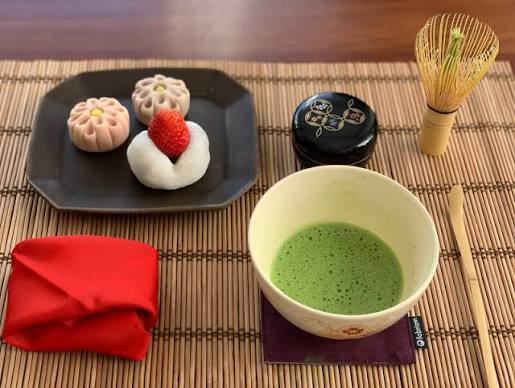
The Japanese tea tradition — chado, the way of tea — developed over several centuries from the austere Zen Buddhist practice of serving powdered tea in monastery settings into a highly formalised aesthetic discipline that influenced architecture, garden design, ceramics, lacquerwork, and the entire visual culture of Japan. The tearoom and the matcha bowl sit at the centre of this tradition, but the wagashi sweets that accompany them are themselves a distinct art form: small confections made from rice flour, red bean paste, agar, and sugar, shaped and coloured to represent the season's defining image — a cherry blossom in March, a maple leaf in November, the first snow of winter. The flavour is secondary to the visual meaning, and eating one in sequence with a bowl of properly prepared matcha — bitter, grassy, with a long finish — is an exercise in contrast that Japanese food culture considers one of its most refined pleasures.
The matcha itself divides into grades that are not immediately obvious from appearance: ceremonial grade, ground from the youngest spring leaves of shaded bushes, has a vivid emerald colour, a full umami depth, and almost no astringency; lower grades are yellower, sharper, and suit cooking rather than drinking. Stone-ground matcha, where the tea leaves are ground to powder between granite millstones rather than mechanically, has a finer texture and a more complex flavour that the best tea houses consider non-negotiable. Terry takes this stop seriously as a moment of deliberate pace in the middle of a day of eating — a chance to sit, look, and taste something that rewards being given time.
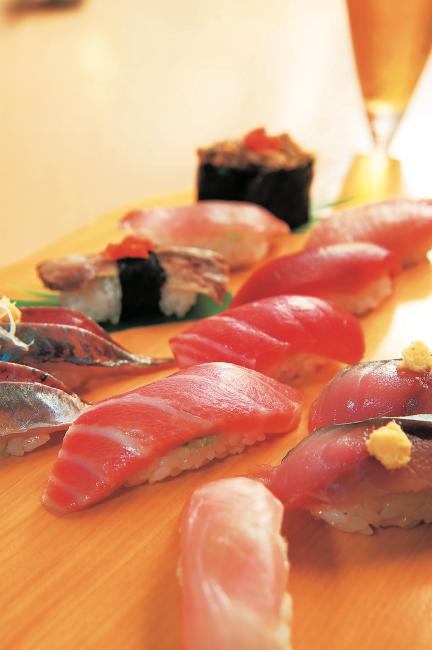
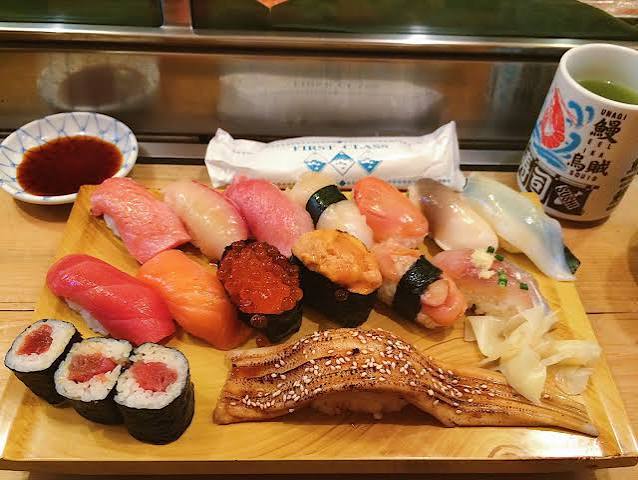
The neighbourhood sushi counter — the sushiya — is one of the most specific and most misunderstood dining experiences in Japan. It is not Sukiyabashi Jiro, it is not a conveyor belt, and it is not the theatrical omakase experience that Western food media has constructed around the idea of Tokyo sushi. It is a counter of eight to twelve seats, a chef who has been making sushi in the same room for twenty or thirty years, fish that was selected at Toyosu market that morning based on what was best rather than what was expected, and a sequence of pieces served at the chef's pace rather than yours. The rice is as important as the fish — the ratio of vinegar, the temperature (body-warm, not cold), the firmness of the press — and a serious sushiya chef considers the rice the more demanding of the two crafts.
The etiquette at a traditional sushi counter is not complicated but is worth knowing: omakase means you leave the selection entirely to the chef; nigiri is eaten by hand rather than chopsticks; soy sauce is applied sparingly to the fish side only, not the rice; ginger is a palate cleanser between pieces rather than a condiment on top of them; and asking for a California roll would be, in a place like this, approximately equivalent to ordering a hamburger in a French bistro. None of this is said to intimidate — the neighbourhood sushiya that Terry knows are welcoming places, and a first-time foreign visitor who shows genuine interest will be treated accordingly. The pieces arrive steadily, the chef answers questions in whatever English is available, and the evening proceeds at a pace that no booking system can replicate.

The izakaya — Japan's neighbourhood pub — is the social institution around which most of the country's after-work life organises itself, and understanding how to use one properly transforms the experience from a restaurant visit into something closer to participation in a daily ritual. The format is built around sharing: small plates arrive continuously rather than in courses, ordered from a handwritten chalkboard that changes with the season and the day's market, and the drinking and eating proceed together in a rhythm that is quite different from either a Western pub or a formal dinner. The first drink arrives quickly — most izakayas operate a torikaezu biiru (first-beer-immediately) convention — and the food follows in whatever order the kitchen can manage, which is not necessarily the order it was requested.
The seasonal chalkboard dishes are where the izakaya reveals the depth of Japanese food culture that the fixed menu never reaches: simmered burdock root with sesame, grilled ginkgo nuts threaded on pine skewers, a small plate of pickled vegetables that changes every few weeks, salt-grilled river fish available only in summer, the slow-cooked offal stew that regular customers order without looking at the menu because they already know it will be good. Terry reads the chalkboard, explains what is exceptional today rather than merely available, and navigates the ordering in a way that builds a table of dishes reflecting the kitchen's best work rather than the most familiar items. The evening ends when it ends — the izakaya does not turn tables, and a good one will leave you with no particular desire to be anywhere else.
Dietary restrictions (allergies, vegetarian, no seafood) fully accommodated if communicated at booking.
* Terry's personal food, transit and tips are also covered — no hidden costs on the day.
Come hungry. Seriously. We will be sampling continuously throughout the walk.
All tours are strictly private — just your personal group with Terry. No strangers, no rushing schedules, no megaphone tour groups.
Terry speaks fluent English and Japanese, seamlessly unlocking local interactions that remain inaccessible to solo travelers.
Because Tokyo’s culinary scene spans diverse micro-neighborhoods, this route naturally demands a fair bit of walking across mixed pavement and bustling alleys.
Since this is a completely tailored, private experience, Terry seamlessly syncs tracking options to accommodate pacing changes or dietary requirements without any stress.